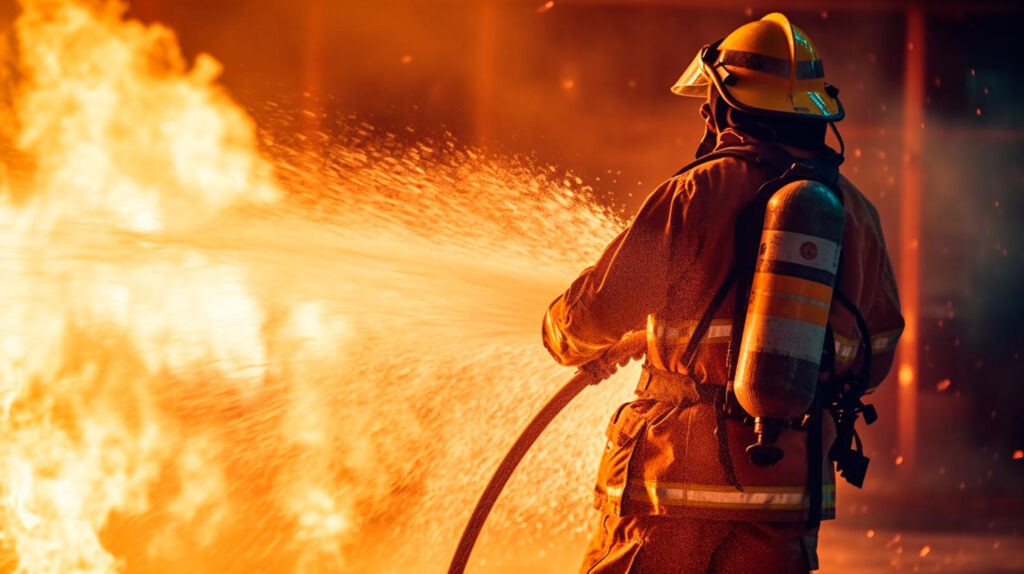
TechInspecta provides Fire Fighting Safety Training for employees, supervisors, contractors, emergency response teams, fire wardens, maintenance personnel and industrial workers who may be required to respond to fire emergencies in the workplace.
This training is designed to help participants understand fire prevention, fire classification, extinguisher selection, emergency response, evacuation procedures and safe first-response fire fighting techniques. In industrial environments such as oil & gas, construction, ports, mining, manufacturing, warehouses and workshops, fire can escalate quickly if workers are not trained to respond correctly.
OSHA requires that where portable fire extinguishers are provided for employee use, workers must receive education on the general principles of fire extinguisher use and the hazards involved with incipient-stage fire fighting. OSHA also notes that this education must be provided when employees are first hired and annually thereafter.
The purpose of TechInspecta’s Fire Fighting Safety Training is to develop basic workplace fire safety competence and prepare workers to respond safely during the early stage of a fire.
The training helps participants understand how to:
- Identify common fire hazards.
- Understand how fires start and spread.
- Recognize different classes of fire.
- Select the correct fire extinguisher.
- Use portable fire extinguishers safely.
- Raise the alarm and activate emergency procedures.
- Evacuate safely.
- Avoid unsafe fire fighting attempts.
- Support emergency response procedures.
- Reduce fire risks in the workplace.
The HSE emphasizes that workplaces should have emergency plans for incidents such as fire, and that people respond more reliably when they are well trained, competent, involved in realistic practice and familiar with agreed emergency procedures.
1. Fire Safety Awareness
Participants are introduced to the basic principles of fire safety, including how fires start, how they spread and how they can be prevented.
Training covers:
- The fire triangle: heat, fuel and oxygen.
- Common ignition sources.
- Combustible and flammable materials.
- Fire spread in buildings and industrial areas.
- Workplace housekeeping.
- Safe storage of flammable materials.
- Hot work fire risks.
- Electrical fire risks.
- Smoking control.
- Emergency preparedness.
2. Classes of Fire
Participants learn the different classes of fire and why the correct extinguishing method must be selected.
Training covers:
- Class A: ordinary combustibles such as wood, paper, cloth and some plastics.
- Class B: flammable liquids such as petrol, diesel, oil, solvents and paints.
- Class C: energized electrical equipment.
- Class D: combustible metals.
- Class K / F: cooking oils and fats.
NFPA and USFA both explain that fire extinguishers are designed for specific classes of fire, and using the wrong type can be ineffective or dangerous.
3. Types of Fire Extinguishers and Their Use
This module explains the main types of portable fire extinguishers and where they are normally used.
Training covers:
- Water extinguishers.
- Foam extinguishers.
- Dry powder extinguishers.
- Carbon dioxide extinguishers.
- Wet chemical extinguishers.
- Specialist extinguishers for metal fires.
- Fire extinguisher labels and markings.
- Extinguisher limitations.
- Safe operating distance.
- When not to use an extinguisher.
Participants learn that extinguishers are only suitable for small, early-stage fires when it is safe to act and escape routes remain clear.
4. Safe Use of Portable Fire Extinguishers
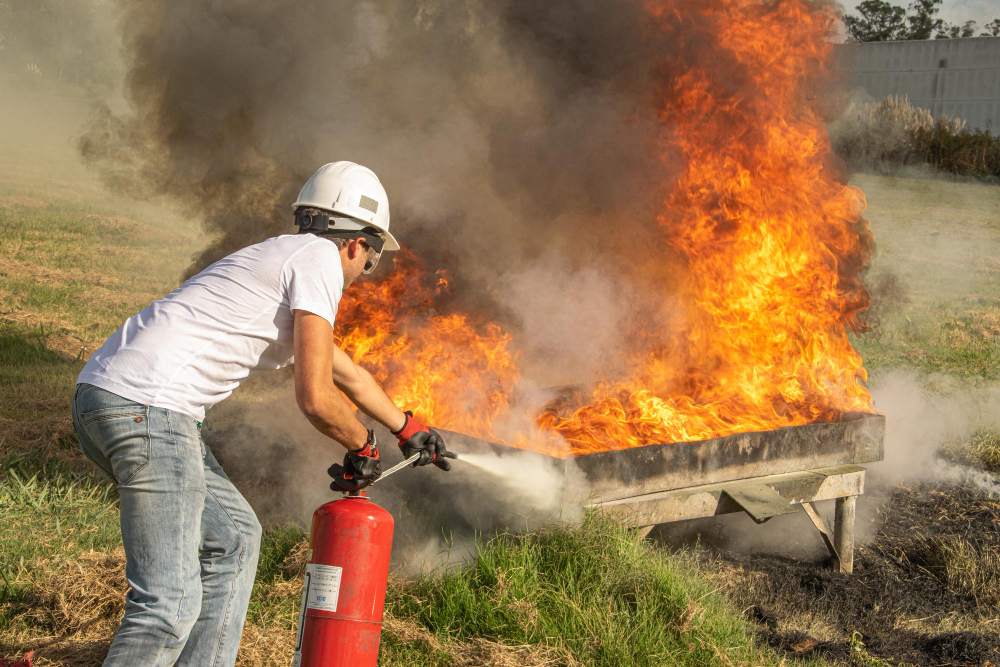
Participants are trained on how to use a portable extinguisher safely and effectively during an incipient-stage fire.
Training covers:
- How to inspect an extinguisher before use.
- How to identify the correct extinguisher.
- How to remove the safety pin.
- How to aim at the base of the fire.
- How to squeeze the handle correctly.
- How to sweep from side to side.
- How to maintain a safe exit route.
- How to stop if the fire grows.
- How to avoid smoke inhalation.
- How to report used or discharged extinguishers.
This module may include the common PASS technique: Pull, Aim, Squeeze and Sweep.
5. Fire Prevention in the Workplace
Fire prevention is one of the most important parts of the training. The objective is not only to react to fire, but to prevent fire from occurring.
Training covers:
- Good housekeeping.
- Control of ignition sources.
- Safe use of electrical equipment.
- Safe storage of flammable liquids.
- Control of welding, grinding and hot work.
- Waste management.
- Inspection of fire exits.
- Keeping fire equipment accessible.
- Reporting fire hazards.
- Fire watch responsibilities.
- Safe fuel and chemical handling.
6. Emergency Alarm and Evacuation Procedures
Participants learn what to do when a fire alarm is activated or when they discover a fire.
Training covers:
- Raising the alarm.
- Calling emergency response.
- Activating site emergency procedures.
- Evacuation routes.
- Assembly points.
- Headcount and accountability.
- Assisting visitors and contractors.
- Never using lifts during fire emergencies.
- Keeping access clear for emergency responders.
- Re-entry control after evacuation.
Safe Work Australia also notes that workplace emergency plans should contain instructions on what to do in an emergency and should be tailored to the workplace.
7. Fire Wardens and Emergency Response Roles
This module explains the responsibilities of personnel involved in workplace fire emergency response.
Training covers:
- Fire warden duties.
- Emergency coordinator duties.
- Area sweep responsibilities.
- Alarm activation.
- Evacuation guidance.
- Assembly point control.
- Communication with emergency services.
- Reporting missing persons.
- Preventing unauthorized re-entry.
- Supporting drills and emergency exercises.
8. Industrial Fire Hazards
For industrial clients, TechInspecta can adapt the training to site-specific fire risks.
Industrial hazards may include:
- Fuel storage areas.
- Chemical storage rooms.
- Welding and hot work areas.
- Electrical rooms.
- Generators and compressors.
- Workshops.
- Warehouses.
- Gas cylinders.
- Paint and solvent storage.
- Confined spaces.
- Offshore modules.
- Port and logistics areas.
- Mining and construction sites.
This makes the training more practical and relevant to the real hazards present in the client’s operations.
9. Fire Fighting Limitations and Personal Safety
Participants are trained to understand that fire fighting must only be attempted when it is safe and within their level of training.
Participants learn not to fight a fire when:
- The fire is spreading rapidly.
- The room is filling with smoke.
- The correct extinguisher is not available.
- The escape route is blocked.
- There is risk of explosion.
- The fire involves unknown chemicals.
- The person is not trained or confident.
- The alarm has not been raised.
- The fire is beyond the early stage.
Key message: life safety comes first. Evacuation is always more important than protecting property.
10. Fire Drills and Practical Demonstration
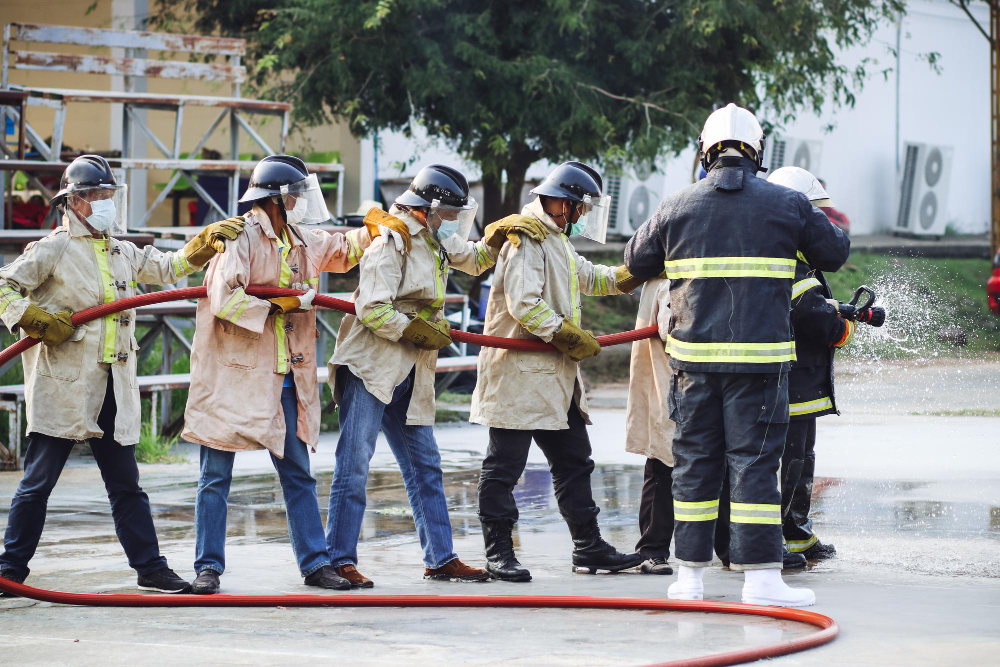
Depending on client requirements, TechInspecta can include practical demonstrations and fire drill support.
Practical components may include:
- Fire extinguisher identification.
- Pre-use extinguisher inspection.
- PASS technique demonstration.
- Simulated extinguisher use.
- Emergency alarm response exercise.
- Evacuation drill observation.
- Fire hazard identification walkdown.
- Fire warden scenario.
- Assembly point control practice.
- Emergency communication practice.