
COMPANY PROFILE
Download our document to see specific data of the service and how we work.
Need an inspection for your machinery or equipment?
Please feel free to contact us. We will get back to you with 1-2 business days. Or just call us now.
The scope may include document review, identification verification, visual examination, mechanical checks, safety-device inspection, functional testing, measurements, vibration assessment and NDT. The final scope depends on the machine and inspection objective.
Inspection frequency depends on equipment criticality, manufacturer recommendations, operating hours, environment, duty cycle, legal requirements and previous findings. High-risk or heavily used equipment may require more frequent inspection.
Some observations and condition measurements can be completed while equipment is operating. Other checks require isolation and shutdown. The inspection plan will identify which activities can be performed safely in each condition.
We support pumps, motors, compressors, gearboxes, conveyors, crushers, mills, mixers, presses, workshop machines, hydraulic equipment, mobile machinery and other industrial assets within the agreed technical scope.
Yes. A pre-purchase inspection can evaluate visible condition, safety features, operational behaviour, documentation and immediate repair needs before a purchasing decision is made.
Yes. Used and refurbished equipment can be inspected to assess its current condition, available documentation, visible repairs, operational performance and suitability for the intended service.
NDT may be used when the inspection scope requires investigation of cracks, surface discontinuities, wall loss or suspected damage. The selected method depends on the material, component and expected defect type.
No inspection can guarantee that equipment will never fail. An inspection provides information based on the accessible components, methods used, operating condition and evidence available at the time of assessment.
Applicable standards may include ISO 12100, ISO 13849-1, IEC 60204-1, the ISO 20816 series, API machinery standards, ASME B30 volumes, ASTM NDT standards and LEEA guidance. The correct standards depend on the machine and inspection purpose.
No. Inspection assesses and documents machinery condition. Maintenance involves servicing, adjusting, repairing or replacing components. An inspection may identify maintenance requirements, but the activities have different purposes.
Yes. Vendor or pre-shipment inspection can be arranged subject to location, access and mobilisation requirements. The scope may include document review, visual inspection, test witnessing, marking, preservation and packing checks.
Duration depends on the number and complexity of assets, equipment accessibility, operational status, test requirements and documentation quality. A small inspection may be completed within one site visit, while large plant assessments may require several days.


Industrial Machinery & Equipment Inspection in Mozambique
Industrial machinery must operate safely, efficiently and reliably under demanding production conditions. A hidden mechanical defect, damaged guard, loose foundation bolt, lubrication failure or malfunctioning safety device can expose workers, production assets and the surrounding environment to serious risk.
TechInspecta Integrity Services, Lda. provides professional Industrial Machinery & Equipment Inspection in Mozambique for companies that need independent technical information about the condition, safety and operational readiness of their equipment.
Our inspection services help asset owners, contractors, manufacturers, project developers and procurement teams identify defects before they become expensive failures. We inspect machinery during procurement, installation, commissioning, operation, shutdowns, maintenance interventions, equipment transfers and pre-purchase evaluations.
The inspection scope is developed according to the equipment type, manufacturer requirements, operating history, client specifications and applicable international standards. Our objective is not simply to complete a checklist. We provide practical engineering findings that help clients make informed maintenance, acceptance and operational decisions.
Whether you operate pumps at an oil and gas facility, crushers at a mine, conveyors at a port, production machines at a factory or hydraulic equipment at a construction site, TechInspecta can develop an inspection programme suited to your operational risks.
Need an independent machinery inspection? Contact TechInspecta Integrity Services, Lda. to request a technical proposal and quotation.
What Is Industrial Machinery and Equipment Inspection?
Industrial machinery and equipment inspection is a structured technical assessment used to determine whether a machine is safe, mechanically sound, properly installed and suitable for its intended operating conditions.
The inspection may include document review, visual examination, dimensional checks, mechanical testing, verification of safety devices, functional testing, non-destructive testing and condition-monitoring measurements.
The final inspection scope depends on several factors:
- The machinery type and function.
- The equipment’s age and operating history.
- The manufacturer’s instructions.
- Known failure modes.
- The operating environment.
- Previous maintenance and repair records.
- Applicable codes, standards and client requirements.
- The consequences of equipment failure.
- The purpose of the inspection.
A machinery inspection is different from routine maintenance. Maintenance involves servicing, adjusting, lubricating, repairing or replacing components. Inspection focuses on identifying, documenting and evaluating equipment condition against defined requirements.
An inspection may recommend maintenance, but it should remain technically independent from the repair decision whenever an impartial assessment is required.
Why Industrial Machinery Inspection Is Important
Machinery can continue operating even when important components are beginning to fail. Early warning signs may include unusual vibration, excessive heat, oil leakage, abnormal noise, reduced output, shaft movement, loose fasteners or changes in electrical current.
When these signs are ignored, a minor defect can develop into:
- Unplanned production shutdown.
- Bearing or gearbox failure.
- Shaft damage.
- Motor burnout.
- Hydraulic hose rupture.
- Structural cracking.
- Product contamination.
- Fire or electrical failure.
- Injury to operators or maintenance personnel.
- Damage to connected equipment.
- Loss of contractual availability.
- Expensive emergency repairs.
Regular inspection supports a more controlled maintenance strategy. It allows the asset owner to prioritise repairs according to actual equipment condition rather than relying only on fixed maintenance intervals.
Industrial machinery inspection can also provide valuable evidence during equipment acceptance, warranty discussions, insurance investigations, asset transfers and contractor performance assessments.
ISO 12100 establishes a recognised methodology for machinery risk assessment and risk reduction. It considers hazards throughout relevant phases of a machine’s life cycle, including operation, maintenance, cleaning and foreseeable misuse.
Machinery and Equipment We Inspect
TechInspecta provides inspection support for a wide range of mechanical and electromechanical assets. The exact scope is agreed before mobilisation.
Rotating Equipment
Rotating machinery is essential to production, processing and utility systems. Small changes in alignment, balance, lubrication or bearing condition can significantly affect reliability.
Our rotating equipment inspection scope may cover:
- Centrifugal and positive displacement pumps.
- Electric motors.
- Compressors.
- Blowers and fans.
- Gearboxes and speed reducers.
- Couplings.
- Drive shafts.
- Turbines, where applicable.
- Agitators and mixers.
- Generators.
- Mechanical seals.
- Bearing housings.
- Belt and chain drives.
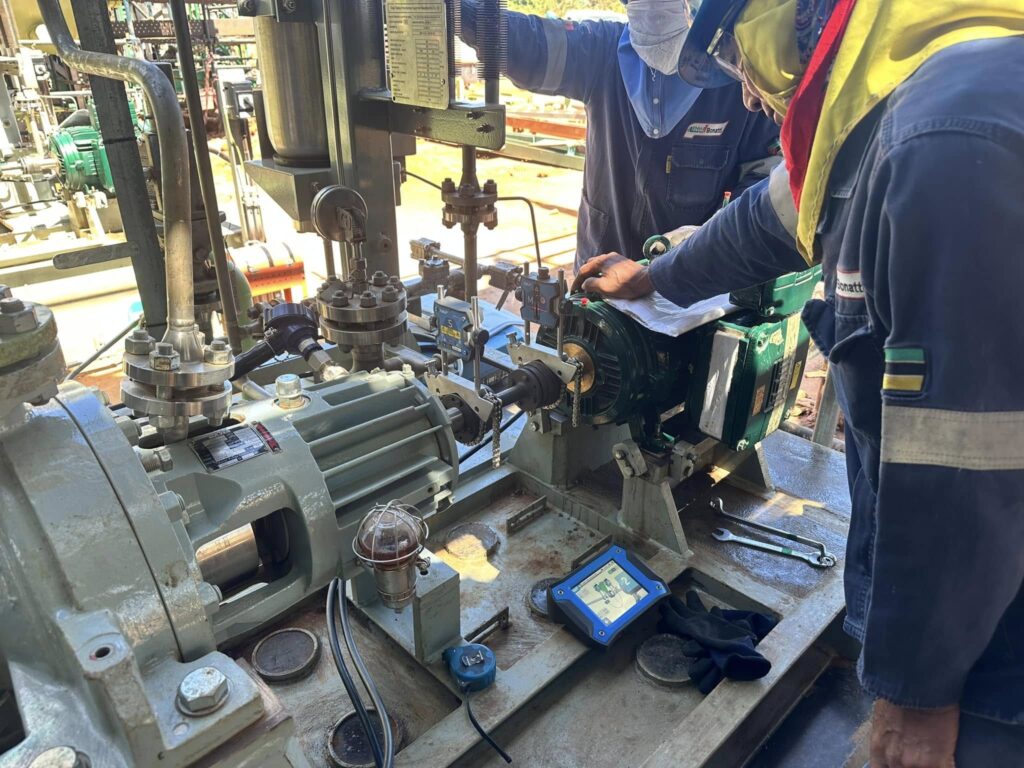
The inspection may evaluate foundation condition, mounting, alignment indicators, coupling condition, lubrication, leakage, abnormal noise, vibration, temperature and general operational behaviour.
Where condition measurements are included, results must be interpreted using the correct machine category, measurement location, operating load, manufacturer limits and historical trends.
The ISO 20816 series provides general guidance for measuring and evaluating machinery vibration. It supports both operational monitoring and acceptance-related assessments, although the applicable part of the series must be selected for the specific machine.
Processing and Production Machinery
We support the inspection of machinery used to process, form, mix, separate, package or move materials.
Typical assets include:
- Crushers.
- Grinding mills.
- Screens and sieves.
- Mixers.
- Industrial presses.
- Compactors.
- Packaging machines.
- Filling machines.
- Cutting machines.
- Bending machines.
- Rolling machines.
- Drilling machines.
- Lathes.
- Milling machines.
- Industrial ovens and dryers.
- Process skids.
- Batch-processing equipment.
The assessment may include frames, guards, access points, moving components, emergency stops, control panels, drives, lubrication systems, foundations and operating controls.
Conveyors and Material-Handling Systems
Conveyors are frequently used in mining, manufacturing, logistics, food processing, terminals and port operations.
Our conveyor inspection scope may include:
- Belt condition.
- Belt tracking.
- Rollers and idlers.
- Pulleys.
- Drive units.
- Gearboxes.
- Guards.
- Emergency pull cords.
- Belt-slip devices.
- Misalignment switches.
- Transfer points.
- Chutes.
- Walkways and access platforms.
- Structural supports.
- Take-up systems.
- Brakes and backstops.
- Accumulated material.
- Lubrication condition.
Inspection findings help clients identify conditions that could lead to belt damage, entanglement, fire, spillage, structural failure or production interruption.
Hydraulic and Pneumatic Equipment
Hydraulic and pneumatic systems can store significant energy, even after a machine has been switched off.
Our inspections may cover:
- Hydraulic power units.
- Pumps.
- Cylinders.
- Hoses.
- Fittings.
- Accumulators.
- Control valves.
- Pressure indicators.
- Filters.
- Reservoirs.
- Pneumatic actuators.
- Air receivers within the agreed scope.
- Regulators and isolation devices.
- Leakage and hose-routing conditions.
Particular attention is given to damaged hoses, unsupported lines, abrasion, leakage, incorrect fittings, pressure-control devices and stored-energy hazards.
Heavy Industrial and Mobile Equipment
Subject to equipment type and agreed boundaries, TechInspecta can provide condition inspection support for:
- Forklifts.
- Telehandlers.
- Loaders.
- Excavators.
- Mobile cranes.
- Elevated work platforms.
- Tractors.
- Industrial trucks.
- Earthmoving equipment.
- Material handlers.
- Construction machinery.
- Special-purpose vehicles.
A heavy-equipment inspection may include tyres, wheels, braking systems, steering, hydraulic systems, structural condition, access, warning devices, controls, safety systems and available maintenance records.
Where the machine includes lifting functions, the applicable lifting-equipment inspection requirements must be treated separately and assigned to competent personnel.
Lifting Equipment Integrated With Machinery
Some industrial machines incorporate hoists, cranes, lifting beams, monorails, lifting points or removable lifting accessories.
Depending on the equipment, applicable references may include specific volumes of the ASME B30 series. For example, ASME B30.2 addresses overhead and gantry cranes, while ASME B30.26 addresses detachable rigging hardware. The correct standard must be selected according to the actual equipment and lifting activity.
LEEA guidance can also support the inspection, examination, documentation and safe use of lifting equipment. LEEA’s COPSULE provides practical guidance for lifting-equipment users, while its technical materials distinguish pre-use, interim and periodic thorough inspection activities.
Industrial Machinery Inspection Applications
Our machinery inspection services can be used at different stages of the equipment life cycle.
Pre-Purchase Machinery Inspection
Buying used machinery without an independent technical assessment can expose the purchaser to hidden repair costs and operational risks.
A pre-purchase inspection can help evaluate:
- General mechanical condition.
- Evidence of damage or previous repair.
- Leakage.
- Corrosion.
- Safety guards.
- Controls.
- Operating behaviour.
- Identification plates.
- Available documentation.
- Maintenance history.
- Apparent suitability for the intended application.
- Immediate repair needs.
The inspection does not eliminate all purchasing risk. However, it gives the buyer a stronger technical basis for negotiation, budgeting and acceptance.
Vendor and Manufacturing Inspection
Third-party inspection during manufacturing can help confirm that equipment is being produced and tested according to the purchase order, drawings, inspection and test plan, approved procedures and technical specifications.
Activities may include:
- Review of approved drawings.
- Material-certificate review.
- Welding-document review.
- Dimensional inspection.
- Visual examination.
- Witnessing of tests.
- NDT report review.
- Coating inspection.
- Nameplate verification.
- Packing and preservation checks.
- Final release inspection.
This service is particularly valuable for imported machinery, critical equipment and projects with defined quality-control requirements.
Installation Inspection
Poor installation can reduce the life of even high-quality machinery.
Installation inspections may verify:
- Foundation condition.
- Grouting.
- Baseplate condition.
- Anchor bolts.
- Levelling.
- Alignment.
- Pipe strain.
- Coupling condition.
- Electrical connections.
- Lubrication readiness.
- Rotation direction.
- Accessibility.
- Guard installation.
- Manufacturer installation requirements.
For oil, gas and petrochemical rotating equipment, references such as API 610 for centrifugal pumps and API 686 for machinery installation may apply when required by the project specification. API identifies API 610 as a standard for centrifugal pumps used in petroleum, petrochemical and natural-gas industries.
Pre-Commissioning and Commissioning Inspection
Before machinery is placed into service, the inspection team may review whether installation, lubrication, electrical systems, controls and protective devices are ready for operation.
Commissioning support may include:
- Pre-start inspection.
- Verification of mechanical completion.
- Review of outstanding punch-list items.
- Rotation checks.
- No-load tests.
- Loaded operational tests.
- Leakage checks.
- Temperature observations.
- Vibration measurements.
- Interlock testing.
- Emergency-stop verification.
- Baseline-data collection.
The inspection records can provide a valuable reference for future condition monitoring.
Periodic In-Service Inspection
Periodic inspections help identify deterioration before it causes failure.
Inspection frequency should not be selected arbitrarily. It should consider equipment criticality, manufacturer recommendations, operating hours, duty cycle, environment, legal requirements, previous findings and failure history.
Critical machinery may require more frequent or more detailed inspection than low-consequence support equipment.
Shutdown and Turnaround Inspection
Planned shutdowns provide access to components that cannot be examined safely while machinery is operating.
Shutdown inspections may cover:
- Internal components.
- Shafts.
- Bearings.
- Gears.
- Couplings.
- Casings.
- Impellers.
- Rotors.
- Seals.
- Wear surfaces.
- Fasteners.
- Welded connections.
- Baseplates.
- Guards.
- Removed components.
Where necessary, non-destructive testing can be used to investigate cracking, surface discontinuities, wall loss or suspected damage.
Post-Repair and Return-to-Service Inspection
After major repair, refurbishment or component replacement, an independent inspection can verify whether the defined repair scope has been completed.
The assessment may include:
- Repair-document review.
- Dimensional checks.
- NDT.
- Alignment verification.
- Fastener verification.
- Guarding.
- Functional testing.
- Leakage checks.
- Baseline vibration.
- Final punch-list review.
Return-to-service approval should always be based on the applicable technical authority, client procedure and regulatory framework.
Incident and Failure Investigation
When machinery fails, an objective technical investigation can help identify contributing factors.
The investigation may examine:
- Fracture surfaces.
- Wear patterns.
- Lubrication condition.
- Alignment.
- Operating data.
- Maintenance records.
- Overload evidence.
- Material condition.
- Fastener failures.
- Electrical protection.
- Environmental exposure.
- Previous warning signs.
The purpose is not merely to identify the broken component. A useful investigation examines why the component failed and what controls are needed to prevent recurrence.
What Our Machinery Inspection Covers
Every inspection is adapted to the asset. A typical scope may include the following activities.
Document and Identification Review
We review available documentation such as:
- Manufacturer manuals.
- Equipment datasheets.
- General arrangement drawings.
- Previous inspection reports.
- Maintenance records.
- Repair records.
- Calibration certificates.
- Test reports.
- Equipment registers.
- Operating procedures.
- Risk assessments.
- Certificates supplied with the equipment.
- Applicable inspection and test plans.
We also compare identification plates, serial numbers, model information, capacity and other asset data against the available records.
Visual and Mechanical Inspection
The visual and mechanical assessment may examine:
- Corrosion.
- Cracks.
- Deformation.
- Missing components.
- Loose or damaged fasteners.
- Leakage.
- Damaged seals.
- Worn belts and chains.
- Coupling condition.
- Bearing condition.
- Lubrication.
- Abnormal movement.
- Structural supports.
- Foundations.
- Access and housekeeping.
- Signs of overheating.
- Unauthorised modification.
- Temporary repair.
- Damaged hoses and cables.
Visual inspection is one of the most valuable inspection methods when it is performed systematically by competent personnel.
Guarding and Machinery Safety
Machinery safety inspection may cover:
- Fixed guards.
- Interlocked guards.
- Perimeter protection.
- Access doors.
- Emergency stops.
- Pull-cord switches.
- Warning signs.
- Isolation points.
- Lockout provisions.
- Safe access.
- Platforms and ladders.
- Pinch points.
- Rotating components.
- Hot surfaces.
- Ejection hazards.
- Stored-energy hazards.
- Restart prevention.
ISO 13849-1:2023 provides a methodology and requirements for safety-related parts of machinery control systems that perform safety functions. Where control-system performance is included in the inspection scope, assessment must be conducted by appropriately competent specialists and against the machine’s defined safety requirements.
Electrical and Control-System Checks
Where electrical inspection is included, the assessment may examine:
- Panel condition.
- Enclosure integrity.
- Cable condition.
- Earthing or bonding.
- Isolation devices.
- Identification.
- Emergency-stop circuits.
- Warning indicators.
- Overload protection.
- Damaged components.
- Evidence of overheating.
- Unauthorised bypasses.
- Control functionality.
- Limit switches.
- Interlocks.
IEC 60204-1 applies to electrical, electronic and programmable electronic equipment associated with machines that are not portable by hand during operation. It is an important reference where machinery electrical systems form part of the inspection scope.
Vibration and Condition Assessment
Where specified, vibration measurements can help identify conditions associated with:
- Imbalance.
- Misalignment.
- Mechanical looseness.
- Bearing deterioration.
- Gear defects.
- Resonance.
- Bent shafts.
- Structural problems.
- Hydraulic or aerodynamic disturbance.
A single vibration reading should not be interpreted without context. Machine speed, load, mounting, measurement position, equipment type and historical trends all affect the result.
Condition assessment is strongest when baseline and trend data are available.
Non-Destructive Testing
NDT may be recommended when visual examination identifies suspected cracking, material loss or damage.
Applicable methods can include:
- Visual Testing.
- Liquid Penetrant Testing.
- Magnetic Particle Testing.
- Ultrasonic Testing.
- Ultrasonic Thickness Measurement.
- Radiographic Testing where technically justified and properly controlled.
ASTM E165/E165M provides procedures for liquid penetrant examination of non-porous materials. The standard also clarifies that separate acceptance criteria are needed to determine whether detected indications are acceptable or rejectable.
This distinction is important. An NDT method can detect or characterise a discontinuity, but final acceptance must be based on the applicable design code, manufacturer criteria, engineering specification or written client requirement.
Functional and Operational Testing
Subject to safe operating conditions, the inspection may include:
- No-load testing.
- Loaded operational testing.
- Start and stop functions.
- Emergency stops.
- Direction of rotation.
- Braking.
- Speed control.
- Limit switches.
- Alarms.
- Interlocks.
- Pressure response.
- Leakage.
- Abnormal noise.
- Temperature.
- Vibration.
- Output observations.
Functional testing must be planned carefully. Energy isolation, exclusion zones, operator communication and emergency arrangements should be established before the test begins.
Our Industrial Machinery Inspection Process
TechInspecta follows a structured process to ensure that the inspection addresses the client’s actual decision-making needs.
1. Initial Consultation
We discuss the equipment, location, operating condition, inspection objective and required deliverables.
The client may require support for:
- Equipment acceptance.
- Periodic inspection.
- Condition assessment.
- Pre-purchase evaluation.
- Shutdown inspection.
- Return to service.
- Compliance review.
- Failure investigation.
- Insurance documentation.
- Vendor inspection.
2. Scope Definition
We define:
- Equipment boundaries.
- Inspection methods.
- Applicable standards.
- Required tests.
- Client responsibilities.
- Access requirements.
- Documentation needed.
- Shutdown requirements.
- Safety controls.
- Reporting format.
- Acceptance criteria.
A clearly defined scope reduces misunderstanding and prevents important components from being excluded unintentionally.
3. Technical Document Review
Available manuals, drawings, specifications, previous reports and equipment history are reviewed before or during the inspection.
Missing documentation is recorded because it can affect the confidence of the final assessment.
4. Site Safety Preparation
Before starting work, the team confirms:
- Site induction.
- Work permit.
- Risk assessment.
- Energy isolation.
- Lockout and tagout.
- Safe access.
- Personal protective equipment.
- Test boundaries.
- Communication arrangements.
- Emergency requirements.
No machinery inspection should expose personnel to uncontrolled movement, pressure, electricity, heat or stored energy.
5. Physical Inspection and Testing
The inspector performs the agreed checks, measurements and tests using suitable equipment and approved procedures.
Findings are supported by photographs, readings, equipment identification and technical observations.
6. Evaluation of Findings
Observed conditions are assessed against:
- Manufacturer requirements.
- Applicable standards.
- Purchase specifications.
- Client procedures.
- Inspection and test plans.
- Approved drawings.
- Baseline data.
- Engineering acceptance criteria.
Findings may be classified by severity or required response, depending on the agreed reporting system.
7. Technical Reporting
The report may include:
- Client and site details.
- Equipment identification.
- Inspection date.
- Scope and limitations.
- Standards and references.
- Methods used.
- Inspection findings.
- Photographs.
- Measurements.
- Test results.
- Non-conformities.
- Recommended actions.
- Inspection status.
- Follow-up requirements.
8. Follow-Up and Close-Out
Where requested, TechInspecta can review corrective-action evidence or perform a follow-up inspection after repairs.
Close-out documentation provides a clear record of which findings were resolved and which items remain outstanding.
Inspection Levels and Service Comparison
| Service level | Typical purpose | Main activities | Typical output |
|---|---|---|---|
| Pre-use or operator check | Identify immediately visible hazards before operation | Basic condition, guards, controls, leaks, tyres, alarms and obvious damage | Operator checklist or defect notification |
| Routine technical inspection | Evaluate general machinery condition | Document review, visual inspection, mechanical checks and basic functional testing | Technical inspection report |
| Detailed condition assessment | Investigate reliability or deterioration | Measurements, vibration, alignment checks, NDT and operational assessment | Condition report with prioritised recommendations |
| Shutdown inspection | Examine normally inaccessible components | Dismantled-component inspection, NDT, dimensional checks and wear assessment | Shutdown inspection report |
| Post-repair inspection | Confirm completion of defined repair work | Repair-document review, checks, testing and punch-list verification | Return-to-service recommendation or close-out report |
| Statutory or accredited examination | Satisfy a defined legal or accreditation requirement | Activities prescribed by the relevant regulation or accreditation scope | Formal certificate or report issued by an authorised body |
The correct service depends on the equipment, risk and contractual requirement. A routine inspection should not be presented as a statutory examination when the necessary legal authority, accreditation or competence requirements do not apply.
Standards and Technical References
Industrial machinery inspection does not rely on one universal standard. The applicable references depend on the equipment type, industry, design basis and inspection objective.
Relevant standards may include:
- ISO 12100 for machinery risk assessment and risk reduction.
- ISO 13849-1 for safety-related parts of machinery control systems.
- IEC 60204-1 for electrical equipment of machines.
- ISO 20816 series for machinery vibration measurement and evaluation.
- API 610 for centrifugal pumps used in petroleum, petrochemical and natural-gas services.
- API 617 for axial and centrifugal compressors and expander-compressors where specified.
- API 686 for machinery installation and installation design.
- ASME B30 series for applicable cranes, hoists and load-handling equipment.
- ASTM E165/E165M for liquid penetrant testing.
- ASTM E709 for magnetic particle examination guidance.
- LEEA COPSULE and technical guidance for applicable lifting equipment.
- Manufacturer manuals and service bulletins.
- Client engineering specifications.
- Project inspection and test plans.
- Applicable Mozambican legal and regulatory requirements.
International standards are selected according to their scope. A standard should not be cited merely because it is well known. It must be relevant to the equipment, method and acceptance decision.
Unsure which standard applies to your machinery? TechInspecta can review the equipment documentation and propose an appropriate inspection basis.
Industries We Serve in Mozambique
Oil and Gas
We support inspection activities associated with:
- Pumps.
- Compressors.
- Generators.
- Process skids.
- Workshop machinery.
- Hydraulic equipment.
- Material-handling systems.
- Rotating packages.
- Construction equipment.
- Maintenance facilities.
Inspection services can support upstream, midstream, downstream, LNG, petrochemical and associated infrastructure projects.
Mining and Mineral Processing
Mining machinery operates in highly abrasive, dusty and demanding environments.
Typical equipment includes:
- Crushers.
- Mills.
- Screens.
- Feeders.
- Conveyors.
- Pumps.
- Gearboxes.
- Hydraulic power units.
- Loaders.
- Material handlers.
- Workshop machines.
Regular inspection helps identify wear, looseness, misalignment, damaged guards, structural cracking and lubrication problems.
Manufacturing
Manufacturing facilities depend on reliable production equipment.
We inspect:
- Production lines.
- Packaging machines.
- Presses.
- Cutting machines.
- Mixers.
- Conveyors.
- Motors.
- Gearboxes.
- Utility equipment.
- Workshop machines.
The service can be used for new-equipment acceptance, periodic inspection, machine relocation or pre-purchase evaluation.
Construction and Infrastructure
Construction machinery is frequently relocated and exposed to impact, dust, mud, vibration and changing operators.
Inspection services can support:
- Earthmoving equipment.
- Telehandlers.
- Forklifts.
- Concrete equipment.
- Generators.
- Compressors.
- Mobile machinery.
- Workshop machinery.
- Site lifting equipment.
Ports, Logistics and Marine Terminals
Ports and logistics facilities depend on reliable material-handling equipment.
Inspection may cover:
- Conveyors.
- Forklifts.
- Mobile cranes.
- Hoists.
- Loading systems.
- Pumps.
- Hydraulic equipment.
- Workshop machines.
- Cargo-handling machinery.
Energy and Power Generation
We support condition and safety assessments for:
- Pumps.
- Motors.
- Fans.
- Gearboxes.
- Generators.
- Compressors.
- Auxiliary machinery.
- Workshop equipment.
- Fuel-handling systems.
Agriculture and Food Processing
Subject to hygienic and operational requirements, machinery inspection can support:
- Processing equipment.
- Pumps.
- Mixers.
- Conveyors.
- Packaging machines.
- Milling equipment.
- Refrigeration-support machinery.
- Agricultural machinery.
Common Defects Identified During Machinery Inspection
Our inspectors may identify conditions such as:
- Missing or damaged guards.
- Excessive vibration.
- Abnormal noise.
- Loose anchor bolts.
- Poor foundation condition.
- Misalignment.
- Oil or hydraulic leakage.
- Worn belts and chains.
- Damaged couplings.
- Overheated bearings.
- Inadequate lubrication.
- Corrosion.
- Cracked welds.
- Structural deformation.
- Damaged hoses.
- Exposed electrical conductors.
- Defective emergency stops.
- Bypassed safety interlocks.
- Illegible identification plates.
- Unauthorised modifications.
- Missing maintenance records.
- Incorrect fasteners.
- Pipe strain on pumps.
- Contaminated lubricants.
- Poor housekeeping around moving machinery.
- Unsafe access.
- Missing warning signs.
- Inadequate isolation points.
Not every defect has the same consequence. The report should distinguish between immediate safety concerns, conditions requiring planned correction and observations that should be monitored.
Inspection Reports and Deliverables
TechInspecta delivers clear, traceable and practical documentation.
Depending on the agreed scope, deliverables may include:
- Machinery inspection report.
- Equipment condition checklist.
- Photographic record.
- Defect register.
- Non-conformity report.
- Measurement record.
- NDT report.
- Functional-test record.
- Equipment-status summary.
- Recommended corrective actions.
- Repair-priority classification.
- Follow-up inspection report.
- Asset-register update.
- Inspection certificate where contractually and technically appropriate.
Our reports are written for both technical and management use. Findings are explained clearly so that maintenance, engineering, HSE, procurement and operations teams can understand the required action.
Benefits of Independent Machinery Inspection
Improved Safety
Inspection helps identify missing guards, damaged controls, stored-energy risks and other unsafe conditions before they contribute to an incident.
Reduced Unplanned Downtime
Early detection allows repairs to be planned before a complete breakdown occurs.
Better Maintenance Decisions
Inspection findings help maintenance teams focus resources on equipment that presents the greatest operational or safety risk.
Stronger Procurement Control
Pre-purchase and vendor inspections reduce the risk of accepting damaged, incomplete or non-compliant machinery.
Longer Equipment Life
Correcting alignment, lubrication, foundation and vibration problems can reduce unnecessary wear.
Improved Documentation
Inspection reports create a traceable history of equipment condition, repairs, tests and outstanding actions.
Greater Operational Confidence
Management receives independent evidence to support acceptance, continued operation, maintenance or replacement decisions.
Support for Compliance
Inspection can help demonstrate that machinery is being evaluated against manufacturer requirements, client procedures and applicable technical standards.
Why Choose TechInspecta Integrity Services, Lda.?
Engineering-Based Inspection
Our approach combines field inspection with engineering judgement. We assess how observed defects may affect safety, reliability and equipment performance.
Independent Technical Assessment
TechInspecta provides impartial findings based on the agreed scope and acceptance requirements.
Knowledge of Industrial Operations
We understand that machinery inspection must support production. Our inspection planning considers shutdown windows, access restrictions, permits and operational priorities.
International Standards
Inspection scopes can be developed around relevant ISO, IEC, API, ASME, ASTM and LEEA references where applicable.
Clear Reporting
We provide practical reports with photographs, findings, measurements and recommended actions.
Integrated Inspection Services
Clients can combine machinery inspection with related services such as:
- Non-Destructive Testing.
- Welding Inspection.
- QA/QC Inspection.
- Lifting Equipment Inspection.
- Piping Inspection.
- Pressure Equipment Inspection.
- Electrical and Instrumentation Inspection.
- Asset Integrity Support.
- Load Testing.
- Vendor Inspection.
Local Support in Mozambique
TechInspecta is positioned to support industrial projects in Mozambique, including work in Maputo, Matola, Beira, Tete, Nacala, Pemba, Palma, Afungi and other project locations, subject to mobilisation requirements.
Commercially Responsive Service
We understand that delayed inspections can affect procurement, commissioning and production schedules. Our team works with the client to define the scope, required documentation and mobilisation plan efficiently.
Industrial Machinery Inspection Across Mozambique
TechInspecta supports operators, contractors and project developers throughout Mozambique.
Inspection services can be mobilised for:
- Industrial plants.
- Construction sites.
- Mines.
- Workshops.
- Oil and gas facilities.
- Power plants.
- Ports.
- Warehouses.
- Manufacturing facilities.
- Equipment yards.
- Vendor premises.
- Remote project sites.
For remote locations, the quotation can include travel, accommodation, access requirements, inspection duration and expected reporting time.
Request an Industrial Machinery Inspection Quotation
Do not wait for machinery failure to reveal a hidden defect.
A planned inspection gives you the information needed to protect personnel, reduce downtime and make better maintenance decisions.
To prepare an accurate quotation, provide:
- Equipment type.
- Manufacturer and model.
- Quantity.
- Site location.
- Operating status.
- Inspection purpose.
- Required standards.
- Available documentation.
- Preferred inspection date.
- Required report or certification format.
Contact TechInspecta Integrity Services, Lda. today to request Industrial Machinery & Equipment Inspection in Mozambique.
The cost of not inspecting is always expensive than the cost of inspecting.
In industries where machinery operates under extreme loads, pressures, temperatures and environmental conditions such as oil & gas, mining and heavy construction even minor undetected defects can escalate rapidly into major failures. The consequences range from unplanned downtime and costly repairs to serious injury, loss of life and regulatory sanctions.
Regular, professional inspection is not just a legal and regulatory requirement — it is the most effective investment an operator can make in the long-term reliability and safety of their assets. TechInspecta’s inspection programmes are designed to catch problems early, extend equipment service life and give clients the technical evidence they need to make informed maintenance and operational decisions.
Every inspection delivered to internationally recognised frameworks.
All TechInspecta inspections are conducted in full compliance with the standards mandated by the world’s leading regulatory bodies and industry authorities:
The scope may include document review, identification verification, visual examination, mechanical checks, safety-device inspection, functional testing, measurements, vibration assessment and NDT. The final scope depends on the machine and inspection objective.
Inspection frequency depends on equipment criticality, manufacturer recommendations, operating hours, environment, duty cycle, legal requirements and previous findings. High-risk or heavily used equipment may require more frequent inspection.
Some observations and condition measurements can be completed while equipment is operating. Other checks require isolation and shutdown. The inspection plan will identify which activities can be performed safely in each condition.
We support pumps, motors, compressors, gearboxes, conveyors, crushers, mills, mixers, presses, workshop machines, hydraulic equipment, mobile machinery and other industrial assets within the agreed technical scope.
Yes. A pre-purchase inspection can evaluate visible condition, safety features, operational behaviour, documentation and immediate repair needs before a purchasing decision is made.
Yes. Used and refurbished equipment can be inspected to assess its current condition, available documentation, visible repairs, operational performance and suitability for the intended service.
NDT may be used when the inspection scope requires investigation of cracks, surface discontinuities, wall loss or suspected damage. The selected method depends on the material, component and expected defect type.
No inspection can guarantee that equipment will never fail. An inspection provides information based on the accessible components, methods used, operating condition and evidence available at the time of assessment.
Applicable standards may include ISO 12100, ISO 13849-1, IEC 60204-1, the ISO 20816 series, API machinery standards, ASME B30 volumes, ASTM NDT standards and LEEA guidance. The correct standards depend on the machine and inspection purpose.
No. Inspection assesses and documents machinery condition. Maintenance involves servicing, adjusting, repairing or replacing components. An inspection may identify maintenance requirements, but the activities have different purposes.
Yes. Vendor or pre-shipment inspection can be arranged subject to location, access and mobilisation requirements. The scope may include document review, visual inspection, test witnessing, marking, preservation and packing checks.
Duration depends on the number and complexity of assets, equipment accessibility, operational status, test requirements and documentation quality. A small inspection may be completed within one site visit, while large plant assessments may require several days.