
Brochure
Download our document to see specific data of the service and how we work.
Need an inspection for your machinery or equipment?
Please feel free to contact us. We will get back to you with 1-2 business days. Or just call us now.
Drill pipe inspection is a controlled examination of pipe bodies, tool joints, threads, shoulders, upset areas, and related drill-stem components. It uses visual, dimensional, and non-destructive testing methods to identify conditions that may affect continued service.
API RP 7G-2 is a primary reference for the inspection and classification of used drill-stem elements. API Spec 5DP, API Spec 7-2, ISO 11961, ASTM NDT standards, manufacturer requirements, and client specifications may also apply.
The interval depends on service severity, operating hours, drilling environment, failure history, client requirements, and pipe condition. High-cycle, corrosive, abrasive, or highly deviated drilling conditions may require more frequent inspection.
Visual inspection is essential, but it may not detect tight fatigue cracks, subsurface discontinuities, internal wall loss, or hidden thread-root defects. Therefore, critical pipe normally requires additional dimensional inspection and appropriate NDT.
Common methods include magnetic particle testing, ultrasonic thickness measurement, ultrasonic flaw detection, electromagnetic inspection, liquid penetrant testing, and visual testing. The correct combination depends on the component and required inspection scope.
Yes, on-site inspection can be planned subject to mobilisation, access, safety, cleaning, handling, lighting, power, and environmental requirements. A pre-mobilisation review confirms whether the site is suitable for the required methods.
New pipe is normally supplied under manufacturing and quality requirements. However, receiving inspection may still be required to verify quantity, identification, transport damage, dimensions, documentation, and contract compliance.
Duration depends on the number of joints, cleaning condition, selected methods, pipe-handling arrangements, inspection level, reporting requirements, and number of work shifts. TechInspecta provides an estimated schedule after reviewing the pipe tally and scope.
The agreed deliverables may include an inspection report, joint-by-joint tally, dimensional records, NDT results, photographs, disposition summary, and inspection statement. The exact document title should reflect the scope and should not imply product certification beyond the work performed.
Drill pipe is a rotating drill-string component that transfers torque and circulates drilling fluid. Casing is installed to support and isolate the wellbore. Tubing is generally used to convey produced or injected fluids. Consequently, each product has different specifications, loading conditions, connections, and inspection criteria.
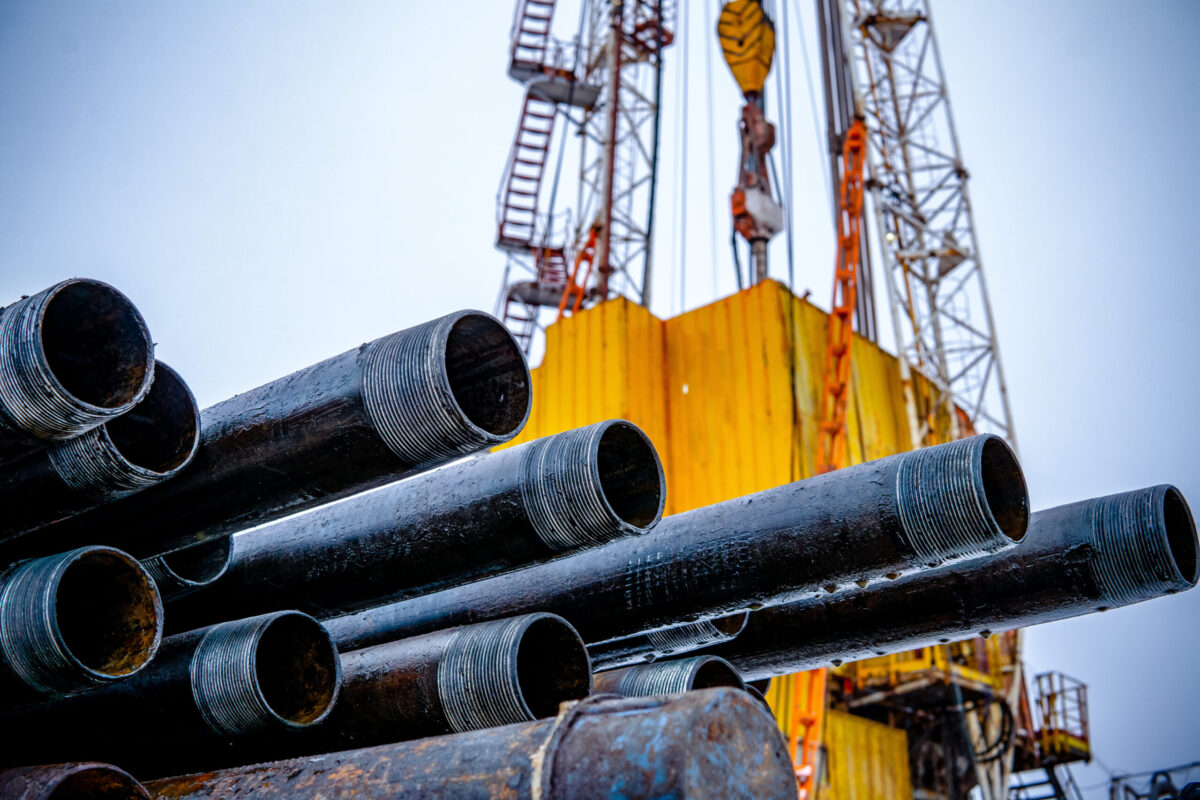
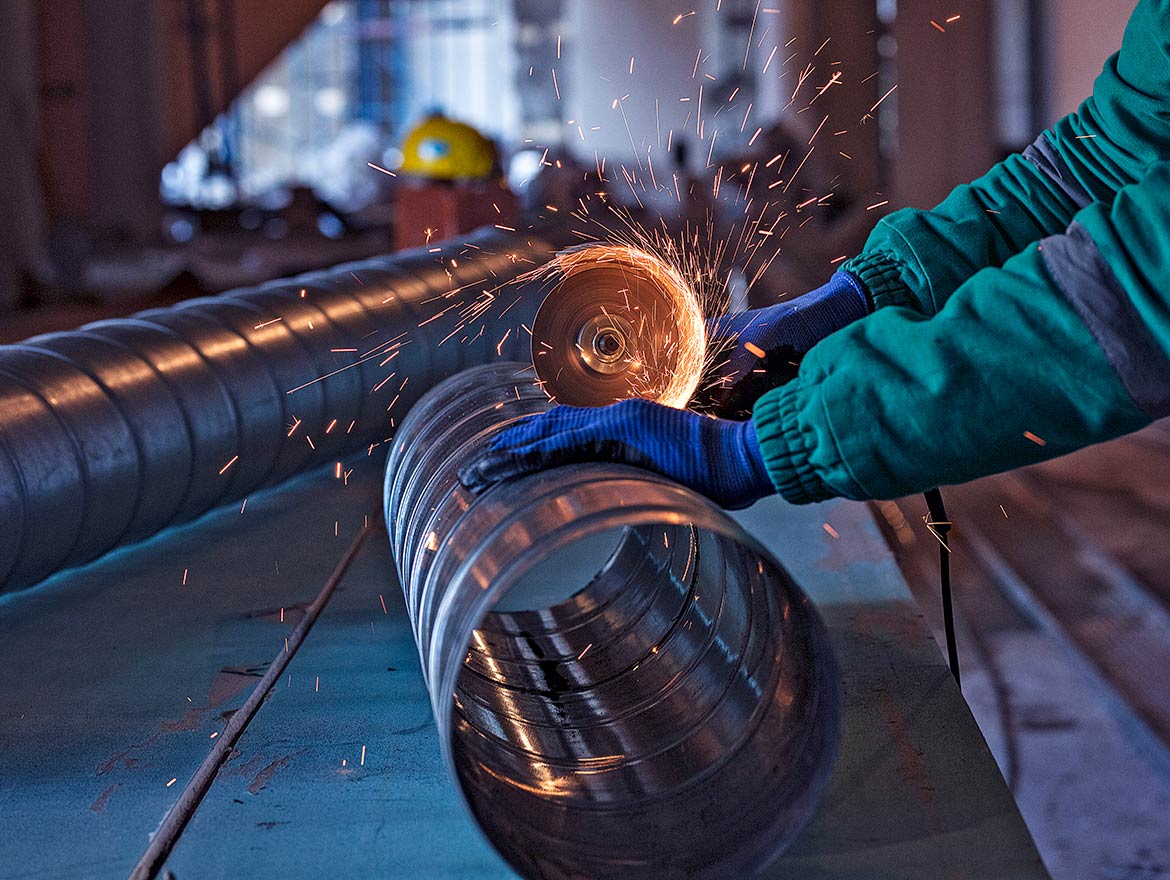
Drilling Pipe Inspection Services in Mozambique
TechInspecta Integrity Services, Lda. provides professional Drilling Pipe Inspection Services in Mozambique for oil and gas operators, drilling contractors, mining companies, well-service providers, equipment rental companies, and industrial asset owners.
Drill pipe operates under demanding mechanical and environmental conditions. During drilling, each pipe may experience repeated tension, compression, bending, torsion, vibration, internal pressure, abrasion, corrosion, and connection make-up cycles. Consequently, defects can develop in the pipe body, upset areas, tool joints, threads, and sealing shoulders.
Some defects remain hidden during routine handling. However, they may grow under cyclic loading and eventually cause a washout, connection failure, pipe separation, fishing operation, or unplanned shutdown. Therefore, a structured inspection programme is essential for confirming the condition of used drill pipe before mobilisation, continued service, rental, transfer, or return to operation.
TechInspecta combines visual examination, dimensional inspection, non-destructive testing, traceability checks, and technical reporting to help clients make informed decisions about drill pipe fitness and classification.
Need drill pipe inspected before your next drilling campaign? Contact TechInspecta Integrity Services, Lda. to request a technical proposal and mobilisation plan.
Our Drill Pipe Inspection service delivers comprehensive, precision-driven assessments of your drill string components, ensuring every pipe that goes into the hole meets the highest standards of structural integrity and operational fitness.
What Are Drilling Pipe Inspection Services?
Drilling pipe inspection services are systematic examinations used to identify wear, corrosion, cracking, deformation, connection damage, dimensional loss, and other conditions that may affect the performance of drill-string components.
The inspection scope is selected according to several factors. These include the pipe type, material grade, service history, drilling environment, previous failures, client specification, original equipment manufacturer requirements, and intended future use.
A professional drill pipe inspection programme may cover:
- Drill pipe bodies
- Internal and external pipe surfaces
- Upset and transition zones
- Tool joints
- Pin and box connections
- Thread profiles
- Sealing shoulders
- Hard-banding areas
- Heavy-weight drill pipe
- Drill collars
- Crossovers and drill-stem subs
- Other rotary drill-stem elements included in the contract
API RP 7G-2 is a key industry reference for the inspection and classification of used drill-stem elements. Its scope addresses inspection levels, test procedures, personnel qualification, inspection methods, equipment calibration, evaluation of imperfections, and marking of inspected components.
However, inspection is not simply a matter of performing several tests. The results must also be evaluated against the correct acceptance criteria. Therefore, TechInspecta confirms the applicable standard, specification, pipe data, and client requirements before issuing a final condition assessment.
Why Drill Pipe Integrity Is Critical
Drill pipe forms a primary structural and hydraulic link between the surface drilling system and the bottom-hole assembly. It transfers rotary torque, carries axial loads, circulates drilling fluid, and supports the operational movement of the drill string.
As a result, even a localised defect can affect the entire drilling operation.
A cracked connection may separate downhole. Excessive wall loss may reduce tensile and torsional capacity. Internal erosion can lead to a washout. Damaged threads can prevent correct make-up. In addition, an uneven sealing shoulder may cause leakage or create abnormal loading within the connection.
The commercial consequences can be substantial. A single drill-string failure may lead to:
- Loss of productive drilling time
- Fishing and retrieval operations
- Damage to downhole tools
- Loss of drilling fluid
- Well-control complications
- Additional equipment mobilisation
- Delayed project milestones
- Higher repair and replacement costs
- Contractual disputes
- Increased exposure of personnel to operational hazards
Therefore, drill pipe inspection should be treated as an asset-integrity activity rather than a basic visual check.
Our Drill Pipe Inspection Scope
TechInspecta can develop an inspection scope based on the condition, quantity, location, and intended service of the pipe. Depending on the agreed specification, the following areas may be examined.
Drill Pipe Body Inspection
The pipe body is assessed for conditions that may reduce its remaining cross-section or structural performance.
Typical inspection activities include:
- External visual examination
- Internal visual examination where access permits
- Outside diameter measurement
- Wall-thickness measurement
- Assessment of corrosion and pitting
- Identification of mechanical wear
- Examination for dents, cuts, gouges, and crushing
- Straightness checks
- Detection of transverse or longitudinal discontinuities
- Examination of worn areas caused by contact with casing or formation
Particular attention is given to localised damage. Although general wall loss is important, a deep isolated pit, groove, gouge, or fatigue crack may present a more immediate concern.
Tool Joint Inspection
Tool joints are exposed to repeated make-up and break-out cycles. Furthermore, they transmit high torque and must maintain an effective connection between individual drill-pipe joints.
Our inspection may include:
- Tool joint outside diameter measurement
- Tool joint inside diameter measurement
- Pin and box visual examination
- Magnetic particle testing
- Shoulder condition assessment
- Tong-space evaluation
- Identification of hard-band damage
- Detection of cracks, heat checking, and mechanical damage
- Assessment of box swell or pin deformation
- Verification of minimum dimensional requirements
Tool joint wear must be compared with the applicable acceptance criteria. Therefore, dimensions are recorded and evaluated rather than judged only by appearance.
Thread and Rotary-Shouldered Connection Inspection
A connection can appear serviceable while containing thread-root cracking, shoulder damage, galling, corrosion, or dimensional problems.
Depending on the inspection scope, connection examination may include:
- Thread cleaning
- Visual thread examination
- Magnetic particle testing of ferromagnetic connections
- Liquid penetrant testing where appropriate
- Thread-profile assessment
- Lead, taper, and stand-off checks
- Connection gauging
- Sealing-shoulder examination
- Identification of galling, washout, pitting, and mechanical damage
API Spec 7-2 covers dimensional requirements, gauges, gauging practices, and inspection methods for rotary-shouldered connections used in drill-string components. It also recognises that connections recut after service require additional inspection and testing.
Upset and Transition-Zone Inspection
The transition between the drill pipe body and tool joint is a critical area. Stress concentration, cyclic bending, manufacturing geometry, and operational loads can contribute to crack initiation in this zone.
Accordingly, the inspection may include visual examination, magnetic particle testing, ultrasonic inspection, or other techniques required by the approved procedure.
Heavy-Weight Drill Pipe and Drill Collar Inspection
Heavy-weight drill pipe and drill collars experience different loading patterns from standard drill pipe. Therefore, the inspection plan must consider component geometry, connection type, spiral configuration, slip areas, stress-relief features, and service history.
TechInspecta can include these components within an integrated drill-stem inspection campaign when they form part of the client’s inventory.
Non-Destructive Testing Methods for Drill Pipe
No single NDT method can detect every type of defect. For this reason, a suitable drill pipe inspection programme normally combines complementary techniques.
Visual Testing
Visual testing is the foundation of the inspection process. Before advanced NDT begins, inspectors assess cleanliness, identification, general condition, corrosion, mechanical damage, connection condition, and obvious deformation.
Visual testing may reveal:
- Severe corrosion
- Damaged hard banding
- Crushed pipe
- Dents and gouges
- Thread galling
- Damaged shoulders
- Washout indications
- Handling damage
- Missing identification
- Evidence of unauthorised repair
Nevertheless, visual inspection alone cannot reliably detect every surface-breaking or subsurface defect.
Dimensional Inspection
Dimensional inspection determines whether critical measurements remain within the applicable limits.
Measurements may include:
- Pipe body outside diameter
- Remaining wall thickness
- Tool joint outside diameter
- Tool joint inside diameter
- Box counterbore dimensions
- Pin and box length
- Tong-space length
- Shoulder dimensions
- Overall pipe length
- Straightness
Calibrated micrometers, callipers, ultrasonic thickness gauges, templates, straight edges, and connection gauges may be used according to the procedure.
Magnetic Particle Testing
Magnetic particle testing is suitable for detecting surface and slightly subsurface discontinuities in ferromagnetic materials. It is commonly applied to tool joints, thread roots, shoulders, upset areas, and other critical locations.
ASTM E3024/E3024M establishes minimum requirements for magnetic particle testing in general industrial applications. Meanwhile, ASTM E709 provides guidance for dry and wet magnetic particle techniques used to detect discontinuities at or near the surface.
Depending on the approved technique, testing may use visible or fluorescent particles. Surface preparation, magnetisation direction, field strength, lighting, equipment checks, and demagnetisation must be controlled.
Ultrasonic Thickness Measurement
Ultrasonic thickness measurement helps quantify remaining wall thickness and localised material loss. It is particularly useful when corrosion, erosion, or internal wear is suspected.
ASTM E797/E797M provides guidance for measuring material thickness using the manual pulse-echo contact method.
However, isolated thickness readings may not identify every crack or localised defect. Therefore, thickness measurement should be integrated with visual inspection and other appropriate NDT methods.
Ultrasonic Flaw Detection
Ultrasonic flaw detection can be used to identify internal or subsurface discontinuities when the component geometry and approved procedure permit reliable examination.
Potential applications include:
- Examination of upset regions
- Detection of internal flaws
- Investigation of suspicious areas
- Confirmation of indications found by another technique
- Examination of pipe bodies using suitable scanning arrangements
ASTM E213 addresses ultrasonic testing of metal pipe and tubing, while other ASTM ultrasonic standards support equipment verification, reference blocks, and testing practices.
Electromagnetic Inspection
Electromagnetic inspection systems can be used for high-volume pipe-body screening. Depending on the equipment and procedure, these systems may identify changes associated with cracks, pitting, wall loss, or other discontinuities.
Nevertheless, electromagnetic indications require correct interpretation. In some cases, follow-up inspection is needed to determine the type, depth, and significance of an indication.
Liquid Penetrant Testing
Liquid penetrant testing detects discontinuities that are open to the surface. It may be useful for examining nonporous components or areas where magnetic particle testing is unsuitable.
ASTM E165/E165M covers liquid penetrant testing for general industrial applications, including the detection of surface-open cracks, seams, laps, laminations, and similar discontinuities.
Because conventional steel drill pipe is ferromagnetic, magnetic particle testing is usually more relevant for many critical areas. However, penetrant testing may still be specified for selected components, materials, or confirmation examinations.
Hardness Testing
Portable hardness testing may be included when abnormal hardness, heat damage, repair history, material verification, or a client specification requires it.
Hardness results must be evaluated carefully. Surface condition, test location, component curvature, instrument type, and material grade can influence the reading.
Drill Pipe Inspection Service-Level Comparison
The following table illustrates common commercial inspection scopes. These service levels are examples only. They do not replace the formal selection of an inspection level under API RP 7G-2 or the client’s approved specification.
| Inspection scope | Typical activities | Suitable application | Main limitation |
|---|---|---|---|
| Routine condition screening | Cleaning review, identification, external visual inspection and selected dimensions | Inventory screening, receiving inspection and low-risk preliminary assessment | Hidden cracks and internal defects may remain undetected |
| Intermediate NDT inspection | Visual inspection, dimensional checks, tool joint MT, wall-thickness checks and connection assessment | Used pipe before mobilisation, rental return or continued service | Scope may not include complete pipe-body scanning |
| Comprehensive API-aligned inspection | Full agreed examination programme, calibrated NDT, connection inspection, pipe-body testing, dimensional classification, traceability and final reporting | Critical drilling campaigns, high-cycle pipe, failure investigation or major recertification | Requires more preparation, cleaning, time and access |
| Targeted engineering assessment | Detailed inspection of known problem areas, damaged joints or components with suspicious indications | Failure investigation, repair evaluation and disposition support | Findings apply only to the defined areas unless the scope is expanded |
TechInspecta helps clients select a proportionate inspection scope. Therefore, clients do not pay for unnecessary activities, while critical risks remain properly addressed.
Standards Applied to Drill Pipe Inspection
The applicable standards depend on the component, inspection method, contract, manufacturer, and client requirements.
| Standard or reference | Typical relevance |
| API RP 7G-2 | Inspection and classification of used drill-stem elements |
| API Spec 5DP | Technical delivery requirements for steel drill pipe and tool joints |
| API Spec 7-1 | Requirements for specified rotary drill-stem elements such as drill collars, HWDP, subs and stabilisers |
| API Spec 7-2 | Threading, dimensional requirements and gauging of rotary-shouldered connections |
| API RP 7G-1 | Drill-stem performance properties and related technical information |
| ISO 11961 | Technical delivery conditions for steel drill pipe |
| ISO 9712 | Qualification and certification requirements for industrial NDT personnel |
| ASTM E3024/E3024M | Magnetic particle testing for general industrial applications |
| ASTM E709 | Guidance for magnetic particle testing |
| ASTM E165/E165M | Liquid penetrant testing for general industry |
| ASTM E797/E797M | Manual ultrasonic thickness measurement |
| ASTM E213 | Ultrasonic testing of metal pipe and tubing |
| ASME BPVC Section V | Supplemental NDE requirements when specifically invoked by a contract or procedure |
| LEEA guidance | Applicable to lifting equipment and accessories used to handle the pipe, rather than the drill pipe acceptance criteria themselves |
API Spec 5DP specifies technical delivery conditions for steel drill pipe with upset ends and weld-on tool joints. It addresses product specification levels and common drill-pipe grades, including E, X, G, and S grades.
ISO 11961 similarly covers technical delivery conditions for steel drill pipe used in petroleum and natural-gas drilling and production operations.
Where independent NDT personnel certification is required, ISO 9712 provides qualification and certification requirements for industrial NDT methods such as magnetic, penetrant, radiographic, ultrasonic, eddy-current, and leak testing.
ASME BPVC requirements are primarily associated with boilers and pressure vessels. Therefore, ASME Section V should be treated as a supplementary NDE reference only when the contract, approved procedure, or client specification invokes it for a particular examination. It is not the principal classification standard for used drill pipe.
Likewise, LEEA focuses on lifting equipment and the lifting industry. Consequently, LEEA guidance may apply to cranes, slings, lifting accessories, pipe-handling tools, and related lifting operations during an inspection campaign. However, it does not replace API drill-pipe inspection and acceptance criteria.
All projects should reference the applicable edition, addenda, errata, client specification, and manufacturer requirements stated in the contract.
Our Drilling Pipe Inspection Process
TechInspecta follows a controlled process to maintain inspection consistency and traceability.
1. Technical Scope Review
First, we review the client’s requirements. This review may include:
- Component type and quantity
- Pipe size, weight, grade, and connection
- Previous inspection reports
- Drilling history
- Known operating problems
- Required inspection standard
- Acceptance criteria
- Reporting format
- Inspection location
- Mobilisation schedule
This stage prevents uncertainty once work begins.
2. Identification and Traceability Review
Next, inspectors review available markings, serial numbers, tally information, colour coding, inventory records, and manufacturer data.
Missing or conflicting identification is recorded. Furthermore, unidentified components are not automatically assigned a grade or specification without adequate evidence.
3. Cleaning and Surface Preparation
Reliable inspection requires suitable surface condition. Therefore, drilling mud, grease, thread compound, scale, corrosion products, and other contaminants may need to be removed.
The required cleaning level depends on the inspection method. For example, magnetic particle and penetrant examinations require surfaces that allow relevant indications to form and remain visible.
4. Initial Visual Examination
The initial visual examination identifies obvious rejectable conditions and areas requiring detailed testing.
It also helps inspectors confirm whether the component is safe to handle and whether further cleaning is needed.
5. Dimensional Inspection
Critical pipe-body, tool-joint, and connection measurements are recorded with calibrated equipment.
Results are compared with the approved acceptance criteria. Therefore, the final decision is based on measured condition rather than personal judgement.
6. Non-Destructive Testing
The specified NDT methods are then applied.
The examination technique, equipment settings, calibration references, coverage, direction of magnetisation, scanning pattern, lighting, couplant, and sensitivity are controlled by approved procedures.
7. Indication Evaluation
Not every indication is automatically a defect. Conversely, a small indication should not be ignored without evaluation.
Inspectors assess:
- Location
- Orientation
- Length
- Depth where measurable
- Relevant versus non-relevant characteristics
- Relationship to geometry
- Acceptance criteria
- Possible need for confirmation testing
8. Classification and Disposition
Each inspected component is assigned an appropriate disposition based on the applicable criteria.
Typical outcomes may include:
- Accepted for the intended service
- Accepted subject to stated limitations
- Held for engineering review
- Repairable where an approved repair is permitted
- Rejected from service
- Segregated because identification or traceability is inadequate
TechInspecta does not recommend returning a component to service merely because a defect can be ground or visually removed. Repair limits, remaining dimensions, heat effects, thread condition, and reinspection requirements must also be considered.
9. Marking and Segregation
Accepted, held, repairable, and rejected items should be clearly separated.
Where required, identification bands, tags, paint markings, or other agreed controls are applied. However, markings must not obscure relevant component identification or create confusion with previous inspection status.
10. Technical Reporting
Finally, TechInspecta prepares an inspection report containing the agreed technical information.
The report may include:
- Client and project details
- Inspection location and date
- Applicable procedure and standard
- Component description
- Identification numbers
- Inspection methods
- Equipment details
- Calibration or standardisation references
- Recorded dimensions
- NDT findings
- Photographs
- Acceptance criteria
- Final disposition
- Inspector identification
- Limitations and recommendations
Common Drill Pipe Defects We Identify
Fatigue Cracking
Drill pipe is exposed to repeated cyclic loading. Consequently, fatigue cracks may initiate at stress concentrations such as thread roots, upset transitions, tool joints, slips, and damaged surfaces.
Fatigue cracks can grow even when individual operating loads remain below the material’s static strength.
Corrosion and Pitting
External and internal corrosion reduce the available cross-section. Moreover, deep pits can act as stress raisers and promote crack initiation.
The significance of corrosion depends on depth, distribution, location, remaining wall thickness, operating environment, and expected loads.
Internal Erosion and Washout
High-velocity drilling fluid, abrasive solids, turbulence, and local damage may contribute to internal erosion.
A washout can reduce hydraulic efficiency, weaken the pipe, and interrupt drilling operations.
Tool Joint Wear
Tool joints may lose outside diameter because of contact, abrasion, hard-band wear, machining, or repeated service.
Excessive wear affects connection strength, tong engagement, hard-band performance, and serviceability.
Thread Damage
Common thread conditions include:
- Galling
- Corrosion
- Chipped threads
- Flattened crests
- Thread-root cracking
- Incorrect profile
- Mechanical impact damage
- Contaminated threads
- Improper repair
- Damage caused by incorrect make-up or break-out
Shoulder Damage
A rotary-shouldered connection requires suitable shoulder contact. Therefore, cuts, pitting, erosion, uneven wear, or impact damage may affect sealing and load distribution.
Dents, Gouges and Slip Damage
Handling equipment can cause local deformation or sharp mechanical damage. In addition, slips may create stress concentrations if the pipe is overloaded, mishandled, or repeatedly clamped in the same area.
Bending and Loss of Straightness
Bent pipe may create abnormal contact, vibration, wear, and bending stress during rotation.
Straightness should therefore be evaluated against the applicable requirements rather than estimated visually from a distance.
Heat Damage
Abnormal heat may alter material properties, damage hard banding, create cracks, or affect the connection.
Evidence of overheating, arc strikes, uncontrolled welding, or unauthorised repair requires further evaluation.
When Should Drill Pipe Be Inspected?
Inspection intervals should be determined by risk and service history rather than by a calendar alone.
Drill pipe should be considered for inspection:
- Before an important drilling campaign
- After extended or severe service
- Following a stuck-pipe event
- After overpull or abnormal torque
- After suspected washout
- Following a drill-string failure
- Before accepting rented pipe
- When rented pipe is returned
- Before transfer between projects
- After prolonged outdoor storage
- Before sale or purchase of used inventory
- Following unauthorised repair or uncertain handling
- When previous reports identify developing wear
- When client or operator specifications require inspection
High dogleg severity, corrosive drilling fluids, abrasive formations, sour environments, repeated make-up cycles, vibration, and high combined loading may justify more frequent or more comprehensive inspection.
Industries We Serve
Oil and Gas Drilling
TechInspecta supports onshore and offshore drilling activities that require reliable drill pipe, drill collars, HWDP, subs, and associated drill-stem equipment.
Services can be planned for drilling contractors, operators, service companies, equipment yards, and rental fleets.
Mining and Mineral Exploration
Exploration drilling equipment also experiences fatigue, wear, corrosion, and connection damage.
Although mining drill rods and related components may use different specifications from API oilfield drill pipe, TechInspecta can develop a suitable inspection scope based on the component design, manufacturer requirements, and intended service.
Geothermal Drilling
Geothermal wells can expose drilling components to demanding temperatures, corrosive fluids, deep drilling conditions, and repeated cyclic loading.
Consequently, robust inspection and traceability are important before critical drilling phases.
Water-Well Drilling
Water-well contractors can use inspection services to assess used drill pipe, connections, and selected drilling tools before continued use.
Geotechnical and Construction Drilling
Foundation, piling, directional drilling, and geotechnical contractors may require examination of drill rods, tooling, adapters, and high-load threaded components.
Drilling Pipe Inspection Services Across Mozambique
TechInspecta can plan inspection support for projects and equipment yards across Mozambique.
Subject to project requirements and mobilisation arrangements, service coverage may include:
- Maputo and Matola
- Pemba and Cabo Delgado
- Afungi and surrounding project areas
- Nacala and Nampula
- Beira and Sofala
- Tete and mining regions
- Inhambane and Temane
- Chimoio and Manica
- Other industrial and remote project locations
On-site inspection can reduce unnecessary transport and shorten equipment turnaround. However, the worksite must provide adequate access, lighting control where required, cleaning facilities, safe pipe-handling arrangements, segregation areas, and suitable environmental conditions for the selected NDT methods.
Planning a drilling campaign in Mozambique? Send your pipe tally, location, required standard, and target inspection date to TechInspecta for a tailored quotation.
Benefits of Professional Drill Pipe Inspection
Reduced Risk of Downhole Failure
The main objective is to identify unacceptable conditions before the pipe returns to service.
Although inspection cannot eliminate every operational risk, it significantly improves decision-making by identifying visible, surface, and selected internal discontinuities.
Improved Equipment Availability
Planned inspection allows defective joints to be segregated before mobilisation. As a result, drilling teams are less likely to discover unsuitable pipe during critical operations.
Better Maintenance Planning
Inspection data shows which components are acceptable, approaching limits, repairable, or rejected.
Therefore, clients can plan replacements and repairs instead of reacting to unexpected shortages.
Extended Asset Life
Not every used joint needs to be discarded. Accurate inspection helps preserve serviceable equipment while removing components that no longer meet the required criteria.
Stronger Traceability
Structured records support fleet management, audits, mobilisation decisions, rental control, and future inspection planning.
Improved Procurement Decisions
Condition reports can support the purchase, sale, rental, or transfer of used drill pipe.
However, an inspection report should always state the scope and limitations so that users understand what was and was not examined.
Support for Contractual Compliance
Operators and drilling contractors often define inspection requirements in their technical specifications.
TechInspecta aligns the inspection programme with the agreed contract, applicable standard, and reporting requirements.
Why Choose TechInspecta Integrity Services, Lda.?
Mozambique-Focused Service
TechInspecta understands the logistical and operational demands of projects in Mozambique.
Therefore, inspection activities can be planned around site access, remote mobilisation, client schedules, shutdown windows, and equipment availability.
Integrated Inspection and NDT Support
Clients can coordinate visual inspection, dimensional examination, NDT, reporting, and related integrity services through one technical service provider.
This integrated approach simplifies communication and reduces gaps between separate inspection activities.
Standards-Based Inspection Planning
Our work scopes are developed around applicable API, ISO, ASTM, ASME, manufacturer, and client requirements.
Importantly, we do not present unrelated standards as drill-pipe acceptance codes. Each reference is applied only where it is technically relevant.
Clear Inspection Documentation
A test result has limited value without traceability and context.
For that reason, TechInspecta focuses on clear component identification, recorded measurements, inspection-method details, photographs, findings, and final disposition.
Independent Technical Reporting
Our inspection reports are designed to help clients make defensible maintenance and operational decisions.
Where an item requires engineering assessment, repair validation, or additional testing, the report identifies that requirement rather than making unsupported assumptions.
Flexible Project Execution
Inspection programmes can be adapted for:
- Small quantities
- Full pipe fleets
- Rental returns
- Pre-mobilisation campaigns
- Shutdowns
- Remote sites
- Equipment yards
- Urgent failure investigations
- Client-witnessed inspections
Broader Asset-Integrity Capability
TechInspecta also supports clients through NDT, welding inspection, QA/QC, lifting-equipment inspection, pressure-equipment inspection, piping inspection, calibration support, and other engineering-integrity services.
Therefore, drill pipe inspection can be integrated into a wider project quality or maintenance programme.
Information Required for a Quotation
To prepare an accurate proposal, clients should provide:
- Project and company name
- Inspection location
- Number of drill-pipe joints
- Pipe sizes and nominal weights
- Material grades
- Connection types
- Quantities of HWDP, drill collars, subs, or other tools
- Current pipe condition
- Required inspection standard
- Required inspection level or client specification
- Previous reports where available
- Cleaning responsibilities
- Lifting and handling arrangements
- Required completion date
- Reporting and marking requirements
- Site access and HSE requirements
Where some information is unavailable, TechInspecta can help define the scope during a technical clarification.
BOP and Well Control Equipment Inspections
Blowout Preventer and Pressure Control Equipment Integrity
TechInspecta also provides inspection support for BOP and well control equipment, helping clients verify the condition, documentation and readiness of critical pressure control assets.
BOP systems are safety-critical barriers used to control well pressure during drilling operations. API Standard 53 is listed by API as providing requirements for the installation and testing of blowout prevention equipment systems for drilling wells.
Inspection may cover:
- Annular BOPs.
- Ram BOPs.
- Blind rams.
- Pipe rams.
- Shear rams.
- BOP stacks.
- Choke and kill lines.
- Choke manifolds.
- Kill manifolds.
- Drilling spools.
- Adapter spools.
- Hydraulic connectors.
- Control hoses and lines.
- Accumulators and control systems.
- Well control valves.
- Pressure-containing components.
- Flanges, hubs and connections.
API Specification 16A is identified by API as the specification for drill-through equipment, with API publishing updates and errata for its 4th edition, including recent 2025 updates.
BOP Inspection Scope
BOP and well control equipment inspection may include:
- Visual condition inspection.
- Pressure-retaining component inspection.
- Body and bonnet condition checks.
- Ram cavity inspection.
- Seal area inspection.
- Flange and hub inspection.
- Ring groove inspection.
- Stud and nut inspection.
- Hydraulic port condition.
- Hose and connection inspection.
- Corrosion and pitting assessment.
- Crack detection by NDT, where required.
- Dimensional verification, where applicable.
- Function test witnessing, where required.
- Pressure test witnessing, where required.
- Documentation and certification review.
Client value: BOP inspection supports well control reliability, regulatory readiness, rig acceptance and safe drilling operations.
Completions Inspection Services
Inspection Support for Well Completion Equipment and Downhole Components
TechInspecta provides Completions Inspection Services to support the safe preparation, verification and deployment of completion equipment used during well completion, workover and production readiness activities.
Completions equipment must be inspected carefully because once installed downhole, failure can lead to costly intervention, production loss, well integrity problems or operational delays.
Inspection may cover:
- Completion tubing.
- Completion assemblies.
- Packers.
- Pup joints.
- Crossovers.
- Landing nipples.
- Flow control components.
- Subsurface safety valve components.
- Wellhead and tree-related completion interfaces.
- Hangers and adapters.
- Downhole tools.
- Service tools.
- Completion accessories.
- Threaded connections.
- Seal areas.
- Pressure-retaining components.
Completions Inspection Scope
Inspection may include:
- Visual inspection.
- Dimensional verification.
- Thread inspection.
- Seal surface inspection.
- Drift testing.
- NDT inspection, where required.
- Pressure test witnessing, where required.
- Function test witnessing.
- Documentation review.
- Material traceability verification.
- Preservation and storage condition check.
- Pre-dispatch inspection.
- Final inspection release support.
Client value: TechInspecta helps clients reduce the risk of completion equipment failure, improve readiness before mobilization and support reliable well delivery.
Documentation and Certification Review
TechInspecta can support review and verification of critical equipment documentation, including:
- Inspection certificates.
- NDT reports.
- Pressure test reports.
- Function test records.
- Material certificates.
- Manufacturing records.
- Equipment data books.
- Serial number traceability.
- Previous inspection reports.
- Repair and maintenance records.
- Drift records.
- Dimensional inspection records.
- Calibration certificates.
- Load and pressure rating documentation.
- Client acceptance documentation.
Benefits to the Client
TechInspecta’s Drilling Pipe Inspection Services help organizations:
- Reduce drill string failure risk.
- Reduce non-productive time.
- Improve drilling equipment reliability.
- Identify defects before mobilization.
- Prevent unsafe tubulars from reaching rig site.
- Improve BOP and well control equipment readiness.
- Improve casing and tubing quality control.
- Support safe completion operations.
- Maintain traceable inspection records.
- Improve contractor and supplier quality control.
- Reduce downtime caused by equipment rejection.
- Support safer onshore and offshore drilling operations.
- Protect people, assets, wells and the environment.
Request Drilling Pipe Inspection Services in Mozambique
Drill pipe condition should not be assumed from age, appearance, or previous use alone.
A structured inspection programme provides objective information about wear, cracking, corrosion, dimensions, connections, and overall serviceability. Consequently, operators can reduce avoidable failures and mobilise equipment with greater confidence.
TechInspecta Integrity Services, Lda. provides responsive, standards-based Drilling Pipe Inspection Services for drilling projects, equipment yards, rental fleets, and industrial operations across Mozambique.
Request a quotation today.
Email: info@techinspecta.com
Website: www.techinspecta.com
Provide your pipe inventory, project location, required standard, and target date. Our team will review the information and recommend an appropriate inspection scope.
Frequently Asked Questions
Drill pipe inspection is a controlled examination of pipe bodies, tool joints, threads, shoulders, upset areas, and related drill-stem components. It uses visual, dimensional, and non-destructive testing methods to identify conditions that may affect continued service.
API RP 7G-2 is a primary reference for the inspection and classification of used drill-stem elements. API Spec 5DP, API Spec 7-2, ISO 11961, ASTM NDT standards, manufacturer requirements, and client specifications may also apply.
The interval depends on service severity, operating hours, drilling environment, failure history, client requirements, and pipe condition. High-cycle, corrosive, abrasive, or highly deviated drilling conditions may require more frequent inspection.
Visual inspection is essential, but it may not detect tight fatigue cracks, subsurface discontinuities, internal wall loss, or hidden thread-root defects. Therefore, critical pipe normally requires additional dimensional inspection and appropriate NDT.
Common methods include magnetic particle testing, ultrasonic thickness measurement, ultrasonic flaw detection, electromagnetic inspection, liquid penetrant testing, and visual testing. The correct combination depends on the component and required inspection scope.
Yes, on-site inspection can be planned subject to mobilisation, access, safety, cleaning, handling, lighting, power, and environmental requirements. A pre-mobilisation review confirms whether the site is suitable for the required methods.
New pipe is normally supplied under manufacturing and quality requirements. However, receiving inspection may still be required to verify quantity, identification, transport damage, dimensions, documentation, and contract compliance.
Duration depends on the number of joints, cleaning condition, selected methods, pipe-handling arrangements, inspection level, reporting requirements, and number of work shifts. TechInspecta provides an estimated schedule after reviewing the pipe tally and scope.
The agreed deliverables may include an inspection report, joint-by-joint tally, dimensional records, NDT results, photographs, disposition summary, and inspection statement. The exact document title should reflect the scope and should not imply product certification beyond the work performed.
Drill pipe is a rotating drill-string component that transfers torque and circulates drilling fluid. Casing is installed to support and isolate the wellbore. Tubing is generally used to convey produced or injected fluids. Consequently, each product has different specifications, loading conditions, connections, and inspection criteria.