
COMPANY PROFILE
Download our brochure to learn more about our services and how we work.
Need an inspection for your machinery or equipment?
Please feel free to contact us. We will get back to you with 1-2 business days. Or just call us now.
These services verify that welding and fabrication work meets approved procedures, drawings, codes and project requirements.
They may include document review, material inspection, fit-up checks, welding surveillance, visual inspection, NDT, repair control and final reporting.
Quality Assurance establishes the processes used to achieve quality.
Quality Control verifies that fabrication follows those processes and meets the specified requirements.
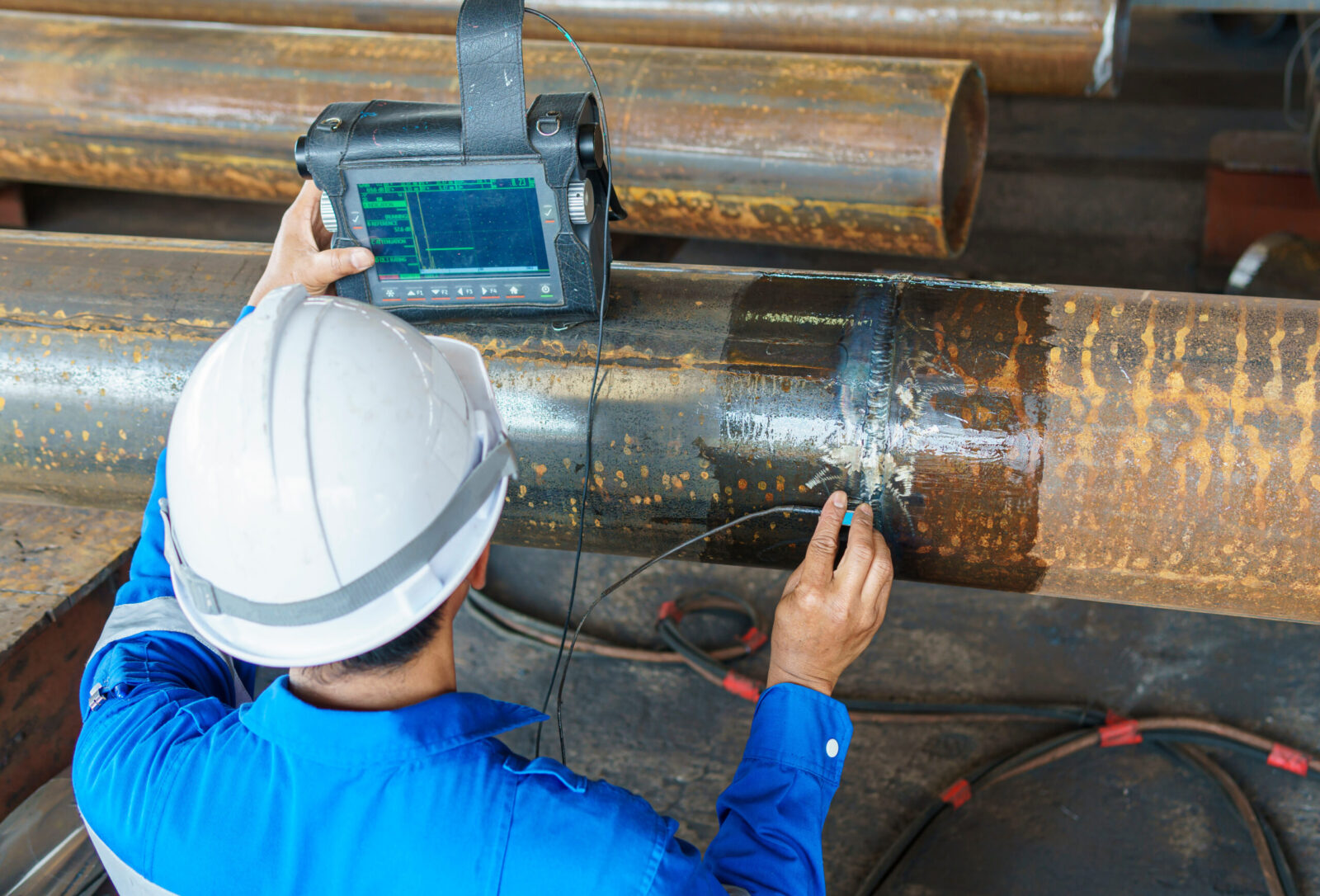
NDT examines materials or welds for discontinuities without destroying the inspected component.
Welding inspection helps prevent defects, reduce rework and verify that welded components meet their intended quality requirements.
It also provides traceable evidence for client acceptance and final handover.
TechInspecta can support piping, pipelines, pressure vessels, tanks, structural steel, skids, modules, industrial equipment, lifting structures and repair projects.
The exact capability and personnel requirements are confirmed during scope review.
Methods may include Visual Testing, Liquid Penetrant Testing, Magnetic Particle Testing, Ultrasonic Testing, thickness measurement, Radiographic Testing, PAUT, TOFD and leak testing.
Availability depends on the project location, material, geometry, safety requirements and agreed scope.
The method is selected according to the material, weld type, thickness, expected defect, accessibility, construction code and required acceptance criteria.
Several methods may be combined when one method cannot provide sufficient coverage.
A Welding Procedure Specification is a document that provides the variables and instructions required to produce a weld under controlled conditions.
It normally identifies the welding process, materials, filler metal, joint design, temperatures, electrical parameters and other relevant variables.
A Procedure Qualification Record documents the actual variables and test results used to qualify a welding procedure.
It provides evidence that the procedure can produce a weld with the required mechanical or metallurgical properties within the applicable qualification range.
Project-based and longer-term inspection support may be arranged according to personnel availability, location, rotation requirements and the required qualifications.

QA/QC Welding & NDT Inspection Services
Reliable welding quality is essential for the safety, integrity and performance of industrial facilities. Poor welding can cause leakage, structural failure, production disruption, expensive repairs and serious safety incidents.
TechInspecta Integrity Services, Lda. provides professional QA/QC Welding & NDT Inspection Services for industrial projects throughout Mozambique. We support asset owners, EPC contractors, fabrication companies, construction contractors, maintenance organisations and project developers with independent inspection, quality surveillance and technical verification.
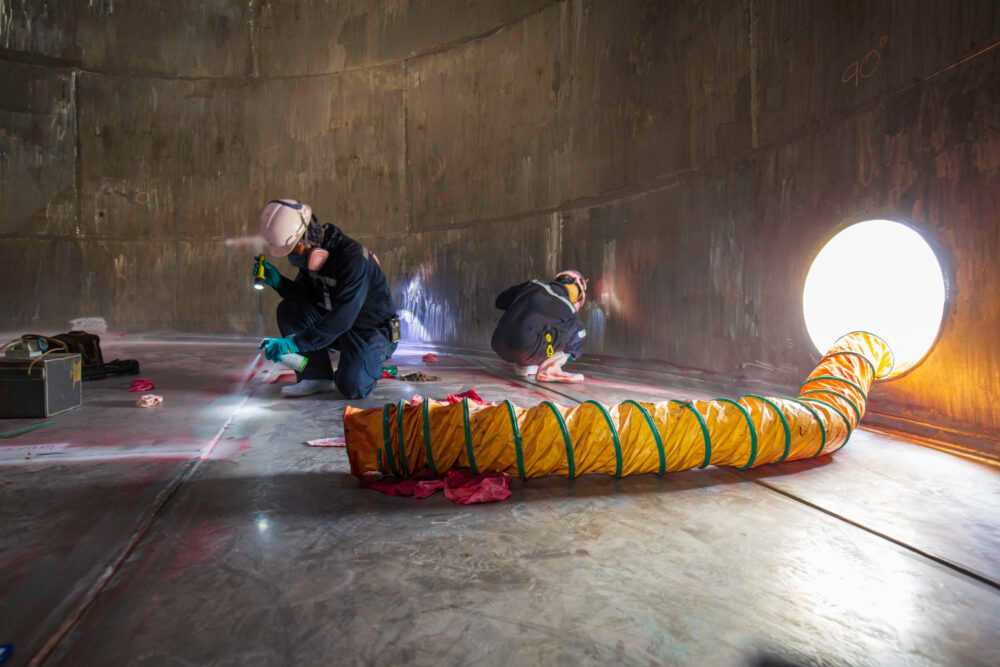
Our services cover the complete welding lifecycle. This includes document review, material verification, welding procedure control, welder qualification review, joint preparation, fit-up inspection, in-process monitoring, visual inspection, Non-Destructive Testing, repair verification and final quality documentation.
We support new construction, plant maintenance, shutdowns, brownfield modifications, equipment repairs and fabrication projects across the oil and gas, mining, energy, construction, marine, manufacturing and petrochemical sectors.
Our objective is straightforward: help clients prevent welding defects, reduce rework, demonstrate compliance and receive reliable welded products that meet the agreed engineering requirements.
Planning a fabrication, pipeline, pressure-equipment or structural project in Mozambique? Contact TechInspecta for a technical and commercial proposal.
Professional Welding Quality Assurance and Quality Control
Welding inspection is more effective when quality is controlled before, during and after welding.
Finding defects only after fabrication is complete can lead to costly repairs and project delays. A strong QA/QC programme prevents avoidable problems by controlling the welding process from the beginning.
TechInspecta provides inspection support across three connected areas:
| Service area | Primary purpose | Typical activities |
|---|---|---|
| Quality Assurance | Establish the system used to achieve welding quality | Procedure review, quality-plan review, personnel qualification checks and document control |
| Quality Control | Verify that fabrication activities meet specified requirements | Material checks, fit-up inspection, welding surveillance, dimensional inspection and final verification |
| Non-Destructive Testing | Detect surface or internal discontinuities without damaging the component | VT, PT, MT, UT, RT, PAUT, TOFD and leak testing where applicable |
Quality Assurance defines how welding quality will be achieved. Quality Control confirms that the planned requirements are being followed. NDT provides technical evidence about the condition of completed welds and materials.
When these activities are integrated, clients receive better control over fabrication quality, traceability and project risk.
What Are QA/QC Welding and NDT Inspection Services?
QA/QC welding inspection is the systematic verification of welding activities against approved drawings, specifications, procedures, codes and client requirements.
The inspection process evaluates more than the final weld appearance. It also examines the factors that influence weld quality, including:
- Base materials.
- Filler materials.
- Welding processes.
- Joint preparation.
- Environmental conditions.
- Welder qualifications.
- Welding procedures.
- Equipment condition.
- Preheat requirements.
- Interpass temperature.
- Heat treatment.
- Inspection methods.
- Acceptance criteria.
- Material and weld traceability.
- Repair control.
- Final documentation.
NDT is used to examine materials and welds without making the inspected component unusable. Different methods are selected according to the material, geometry, expected defect, weld thickness, accessibility and governing code.
For example, penetrant testing is commonly used to detect surface-breaking discontinuities in suitable non-porous materials. Magnetic particle testing is used on ferromagnetic materials to identify surface and near-surface discontinuities. Ultrasonic and radiographic methods can be used to examine the internal volume of suitable welds.
Complete QA/QC Welding Inspection Scope
TechInspecta can support the full fabrication and construction process. The exact scope is adapted to the equipment, project phase, governing standard and client inspection plan.
Pre-Welding Inspection and Quality Planning
Effective welding control begins before the welding arc is started.
Our pre-welding inspection activities may include the following.
Review of Project Specifications
We review relevant technical requirements to confirm:
- Applicable construction code.
- Project specifications.
- Welding requirements.
- Required NDT methods.
- Examination percentages.
- Acceptance criteria.
- Material requirements.
- Heat-treatment requirements.
- Inspection hold points.
- Documentation requirements.
- Client approval requirements.
Conflicts or missing information should be clarified before fabrication begins.
Inspection and Test Plan Review
An Inspection and Test Plan identifies the inspections, tests, acceptance criteria and responsible parties for each stage of work.
TechInspecta can review or support the preparation of:
- Inspection and Test Plans.
- Quality Control Plans.
- Method statements.
- Welding inspection checklists.
- NDT plans.
- Hold-point schedules.
- Witness-point schedules.
- Manufacturing record requirements.
- Final dossier indexes.
A clear ITP helps the client, contractor and inspector understand when inspection is required and who must approve each stage.
Welding Procedure Review
A Welding Procedure Specification provides the instructions required to produce a weld under controlled conditions.
Depending on the applicable code, the review may cover:
- Welding process.
- Base-metal group.
- Filler-metal classification.
- Joint design.
- Welding position.
- Electrical characteristics.
- Shielding gas.
- Preheat temperature.
- Interpass temperature.
- Heat input.
- Travel speed.
- Post-weld heat treatment.
- Backing requirements.
- Cleaning between passes.
- Essential and supplementary variables.
- Qualified thickness and diameter ranges.
The supporting Procedure Qualification Record is checked to confirm that the procedure has been qualified for the proposed production welding.
ASME BPVC Section IX contains requirements related to the qualification of welding, brazing and fusing procedures and personnel when invoked by the applicable construction code.
Welder Qualification Verification
Before production welding begins, the inspector confirms that each welder or welding operator is qualified for the required scope.
The review may include:
- Welder identification.
- Welding process.
- Welding position.
- Product type.
- Material group.
- Filler-metal classification.
- Qualified thickness.
- Qualified pipe diameter.
- Backing conditions.
- Transfer restrictions.
- Qualification validity.
- Continuity records.
A welder may be highly experienced but still require a valid qualification for the specific process, position, material and range required by the project.
Material Verification and Traceability
Material traceability helps ensure that the installed component matches the approved design and specification.
Our inspection activities may include:
- Review of material certificates.
- Verification of heat numbers.
- Material grade confirmation.
- Identification-transfer checks.
- Dimensional verification.
- Visual material condition checks.
- Filler-metal verification.
- Consumable-storage assessment.
- Positive Material Identification where specified.
- Traceability between materials, drawings and fabrication records.
Material substitution should not be accepted without the required engineering and client approval.
Welding Consumable Control
Welding consumables can affect weld chemistry, strength, toughness and resistance to cracking.
Inspection may verify:
- Electrode classification.
- Filler-wire identification.
- Batch or lot numbers.
- Storage conditions.
- Electrode oven temperatures.
- Holding-oven practices.
- Exposure limits.
- Reconditioning procedures.
- Issue and return records.
- Shielding-gas identification.
- Contamination prevention.
Joint Preparation and Fit-Up Inspection
Poor fit-up can cause lack of fusion, incomplete penetration, excessive reinforcement, distortion and dimensional problems.
Before welding, we may inspect:
- Bevel angle.
- Root face.
- Root opening.
- Joint alignment.
- Hi-low or internal misalignment.
- Tack welds.
- Backing materials.
- Cleanliness.
- Surface condition.
- Temporary attachments.
- Joint identification.
- Pipe orientation.
- Branch connection geometry.
- Access for welding and inspection.
Welding should begin only after the joint meets the applicable requirements.
Inspection During Welding
In-process inspection helps identify deviations before they affect the full weld.
Welding Parameter Monitoring
The inspector may verify that production welding follows the approved procedure.
Monitored parameters can include:
- Welding process.
- Current.
- Voltage.
- Polarity.
- Travel speed.
- Heat input.
- Electrode diameter.
- Filler-metal classification.
- Shielding-gas type and flow rate.
- Welding position.
- Bead sequence.
- Cleaning between passes.
- Preheat temperature.
- Interpass temperature.
- Environmental protection.
The level of monitoring depends on project risk, client requirements and inspection frequency.
Preheat and Interpass Temperature Control
Correct temperature control can reduce the risk of hydrogen-related cracking, excessive hardness, poor fusion and undesirable metallurgical changes.
Inspection may confirm:
- Required preheat temperature.
- Measurement location.
- Measuring-device condition.
- Maximum interpass temperature.
- Heating method.
- Temperature uniformity.
- Recording requirements.
- Temperature maintenance during interruptions.
Welding Environmental Conditions
Wind, rain, dust, humidity and low surface temperature can affect weld quality.
Site welding may require:
- Weather protection.
- Wind shielding.
- Dry working surfaces.
- Controlled consumable exposure.
- Suitable lighting.
- Safe working access.
- Protection of shielding gas.
- Prevention of contamination.
Weld Identification and Traceability
Each production weld should be traceable where required by the project.
Traceability may include:
- Weld number.
- Drawing or isometric reference.
- Joint location.
- Welder identification.
- Welding procedure.
- Date of welding.
- Material heat numbers.
- NDT status.
- Repair history.
- Final acceptance status.
This information supports construction control, turnover documentation and future asset integrity management.
Post-Welding Inspection
After welding, the completed joint must be examined according to the approved inspection plan.
Visual Weld Inspection
Visual Testing is the first and most widely applied weld examination method.
A visual inspection may evaluate:
- Weld profile.
- Weld size.
- Reinforcement.
- Undercut.
- Overlap.
- Surface porosity.
- Crater condition.
- Arc strikes.
- Spatter.
- Visible cracks.
- Incomplete filling.
- Misalignment.
- Root condition where accessible.
- Weld cleanliness.
- Base-material damage.
- Distortion.
- Dimensional compliance.
Visual inspection should not be treated as a quick administrative check. It requires adequate access, suitable lighting, calibrated measuring tools where required and knowledge of the applicable acceptance criteria.
Dimensional Inspection
Dimensional checks may include:
- Overall dimensions.
- Flange orientation.
- Nozzle projection.
- Pipe spool dimensions.
- Structural alignment.
- Straightness.
- Level.
- Squareness.
- Angular distortion.
- Bolt-hole alignment.
- Weld size.
- Component orientation.
- Support location.
- Skid dimensions.
Dimensional errors can prevent installation even when the welding itself is acceptable.
Post-Weld Heat Treatment Verification
Where Post-Weld Heat Treatment is required, inspection may include:
- Procedure review.
- Thermocouple location.
- Heating-rate verification.
- Soaking-temperature verification.
- Holding-time verification.
- Cooling-rate verification.
- Temperature-chart review.
- Equipment calibration review.
- Insulation checks.
- Heat-treatment report approval.
Weld Repair Control
Weld repairs should be controlled through an approved process.
Repair inspection may include:
- Defect location.
- Defect-removal method.
- Excavation dimensions.
- Confirmation of complete defect removal.
- Magnetic particle or penetrant examination of the excavation.
- Approved repair procedure.
- Welder qualification.
- Preheat control.
- Repair welding surveillance.
- Final NDT.
- Repair-cycle documentation.
- Engineering approval where required.
Repeated repairs may require further technical investigation rather than continued excavation and rewelding.
Our Non-Destructive Testing Methods
TechInspecta can coordinate or provide NDT methods suited to the project scope and applicable acceptance criteria.
The method is selected according to:
- Material type.
- Component geometry.
- Weld configuration.
- Thickness.
- Surface condition.
- Expected discontinuity.
- Accessibility.
- Required sensitivity.
- Applicable code.
- Client specification.
- Safety restrictions.
ISO 17635 provides guidance on selecting NDT methods for welds and evaluating results according to factors such as the material, welding process, weld thickness, quality requirements and extent of testing. The current ISO catalogue identifies ISO 17635:2025 as the published general-rules standard for metallic welds.
Visual Testing
Visual Testing can be performed before, during and after welding.
Applications include:
- Joint preparation.
- Fit-up.
- Root-pass condition.
- Interpass cleaning.
- Final weld profile.
- Surface defects.
- Dimensional checks.
- Repair verification.
- General fabrication quality.
VT is often the first NDT method applied because it can identify visible problems before more advanced examination is performed.
Liquid Penetrant Testing
Liquid Penetrant Testing is used to detect discontinuities open to the surface of suitable non-porous materials.
Typical applications include:
- Stainless-steel welds.
- Aluminium components.
- Non-magnetic alloys.
- Machined surfaces.
- Root areas.
- Repair excavations.
- Sealing surfaces.
- Castings and forgings.
The basic process normally includes:
- Surface preparation.
- Penetrant application.
- Penetration time.
- Excess penetrant removal.
- Developer application.
- Development time.
- Inspection.
- Interpretation.
- Post-cleaning.
ASTM E165/E165M addresses procedures for liquid penetrant examination and its use for detecting surface-breaking discontinuities in suitable materials.
Magnetic Particle Testing
Magnetic Particle Testing is used on ferromagnetic materials.
Typical applications include:
- Carbon-steel welds.
- Structural connections.
- Pressure-equipment welds.
- Lifting points.
- Crane components.
- Repair excavations.
- Shafts and mechanical components.
- Fillet welds.
- Nozzle attachments.
- Fatigue-sensitive areas.
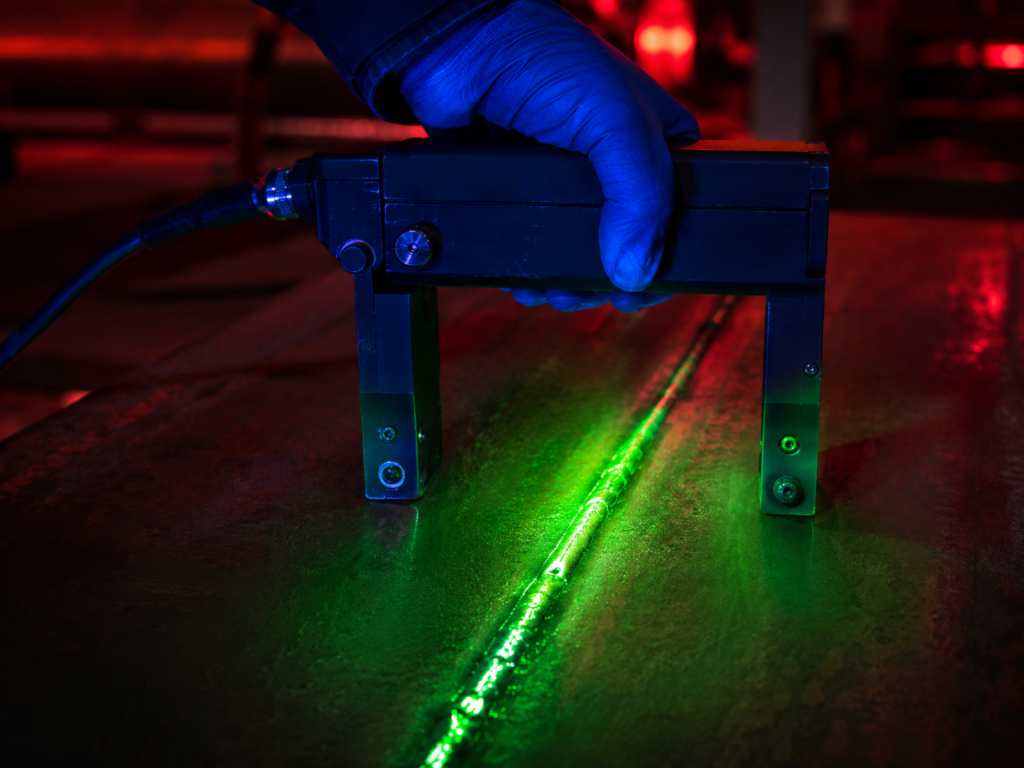
The method is effective for detecting surface and certain near-surface discontinuities. However, magnetisation direction must be considered because defect orientation affects detection sensitivity.
ASTM E709 provides guidance on dry and wet magnetic particle testing techniques for detecting cracks and other discontinuities in ferromagnetic materials.
Ultrasonic Testing
Ultrasonic Testing uses high-frequency sound energy to examine suitable materials and welds.
Applications may include:
- Butt-weld examination.
- Lamination checks.
- Plate inspection.
- Forging examination.
- Wall-thickness measurement.
- Corrosion assessment.
- Weld repair verification.
- Pressure-equipment inspection.
- Pipeline inspection.
- Structural weld inspection.
UT can provide information about the location and response of internal reflectors. Its effectiveness depends on the procedure, calibration, component geometry, surface condition and operator competence.
Ultrasonic Thickness Measurement
Ultrasonic thickness measurement is commonly used to assess remaining wall thickness without cutting the component.
It may be applied to:
- Process piping.
- Pressure vessels.
- Storage tanks.
- Offshore structures.
- Utility systems.
- Corroded steelwork.
- Marine components.
- Boilers.
- Heat exchangers.
- Industrial equipment.
Reliable measurements require correct equipment calibration, suitable probe selection, surface preparation and accurate location recording.
Radiographic Testing
Radiographic Testing uses X-rays or gamma radiation to produce an image of the internal condition of a suitable component or weld.
Applications may include:
- Piping welds.
- Pipeline girth welds.
- Pressure-vessel welds.
- Tank welds.
- Castings.
- Fabricated components.
RT can provide a permanent examination record. However, radiation safety, access control, exposure arrangements, material thickness and defect orientation must be considered.
Radiographic work must be planned under appropriate radiation-protection controls and applicable legal requirements.
Phased Array Ultrasonic Testing
Phased Array Ultrasonic Testing uses multiple ultrasonic elements that can be electronically controlled to produce and steer sound beams.
PAUT may be used for:
- Weld examination.
- Corrosion mapping.
- Nozzle inspection.
- Complex geometries.
- Pipeline girth welds.
- Pressure-vessel welds.
- Encoded examination.
- Repair verification.
It can provide recorded inspection data and sectional views. However, its use requires a suitable procedure, qualified personnel and appropriate validation for the specific application.
Time of Flight Diffraction
TOFD uses diffracted ultrasonic signals to detect and size certain weld discontinuities.
It may be applied to:
- Thick-section welds.
- Pressure-vessel welds.
- Process-piping welds.
- Storage components.
- Critical fabrication joints.
- In-service inspection.
TOFD is frequently combined with other methods because no single NDT technique is ideal for every defect type or geometry.
Leak Testing
Leak Testing is used to evaluate the pressure boundary or tightness of a system.
Methods may include:
- Hydrostatic testing.
- Pneumatic testing.
- Vacuum box testing.
- Bubble leak testing.
- Pressure-decay testing.
- Tracer-gas methods where specified.
Pressure testing presents stored-energy risks. Therefore, it requires an approved procedure, calibrated instruments, defined exclusion zones and suitable safety controls.
Positive Material Identification
Positive Material Identification may be required to verify the nominal alloy composition of materials or components.
Applications include:
- Alloy piping.
- Stainless-steel systems.
- Pressure equipment.
- Replacement materials.
- Weld consumables or deposits where technically suitable.
- Mixed-material fabrication areas.
- Existing systems with uncertain identification.
PMI supports material verification but does not replace a complete material certificate or engineering review.
Hardness Testing
Hardness testing may be required after welding, heat treatment or repair.
Applications can include:
- Sour-service equipment.
- Heat-affected zones.
- Weld metal.
- Post-weld heat-treatment verification.
- Material condition checks.
- Procedure qualification.
- Repair evaluation.
Testing locations, surface preparation, instrument type and acceptance criteria must be defined by the applicable specification.
NDT Method Comparison
| NDT method | Main capability | Suitable materials | Common applications | Important limitation |
| Visual Testing | Detects visible surface and dimensional conditions | Most accessible materials | Fit-up, weld profile, fabrication checks | Requires direct or suitable remote visibility |
| Penetrant Testing | Detects surface-breaking discontinuities | Suitable non-porous materials | Stainless steel, aluminium and machined parts | Cannot detect subsurface defects |
| Magnetic Particle Testing | Detects surface and near-surface discontinuities | Ferromagnetic materials | Carbon-steel welds and components | Not suitable for non-ferromagnetic materials |
| Ultrasonic Testing | Detects and locates internal reflectors | Suitable sound-transmitting materials | Butt welds, plates and pressure equipment | Results depend strongly on geometry and operator skill |
| Radiographic Testing | Produces an image of internal weld condition | Many metallic materials | Pipe, vessel and pipeline welds | Radiation controls and access restrictions apply |
| PAUT | Provides steered ultrasonic coverage and recorded data | Suitable metallic components | Complex welds and encoded examinations | Requires specialised procedures and competence |
| TOFD | Detects and sizes certain internal discontinuities | Suitable weld geometries | Thick welds and critical joints | Dead zones and geometry must be considered |
| Leak Testing | Evaluates system tightness or pressure-boundary leakage | Pressure-containing systems | Tanks, piping and vessels | Stored-energy and test-medium hazards require control |
Unsure which inspection method is required? Send TechInspecta the drawing, material, thickness, weld configuration and applicable code for technical scope development.
Welding and NDT Applications
Our QA/QC Welding & NDT Inspection Services can be applied to a wide range of industrial assets and fabrication activities.
Process Piping
Inspection support may cover:
- Shop-fabricated pipe spools.
- Field welds.
- Butt welds.
- Socket welds.
- Branch connections.
- Weldolets and threadolets.
- Flanges.
- Valves.
- Supports.
- Small-bore piping.
- Utility piping.
- High-pressure piping.
- Stainless-steel piping.
- Alloy piping.
- Repair welds.
Pipelines
Pipeline inspection may include:
- Pipe receiving inspection.
- Material traceability.
- Bevel inspection.
- Alignment and fit-up.
- Root-pass inspection.
- Welding surveillance.
- Welder qualification review.
- Girth-weld NDT.
- Repair inspection.
- Coating-cutback checks.
- Weld mapping.
- Final documentation.
API Standard 1104 addresses welding requirements used in the construction and in-service repair of pipelines and related components within its defined scope.
Pressure Vessels
Pressure-vessel fabrication and repair inspection may cover:
- Shell seams.
- Head seams.
- Nozzle welds.
- Manways.
- Attachments.
- Supports.
- Reinforcement pads.
- Internal components.
- Repair areas.
- Heat treatment.
- Hydrostatic testing.
- Final dimensional checks.
Storage Tanks
Tank welding inspection may apply to:
- Bottom plates.
- Annular plates.
- Shell courses.
- Vertical seams.
- Horizontal seams.
- Roof plates.
- Nozzles.
- Manways.
- Reinforcement plates.
- Structural attachments.
- Tank repairs.
- Vacuum box testing.
- Hydrostatic testing.
Structural Steel
Structural welding inspection may include:
- Buildings.
- Pipe racks.
- Platforms.
- Walkways.
- Skids.
- Modules.
- Equipment supports.
- Crane structures.
- Bridges.
- Industrial frames.
- Handrails.
- Stairs.
- Offshore structures.
AWS D1.1/D1.1M:2025 covers welding requirements for structures made from commonly used carbon and low-alloy constructional steels, including fabrication, qualification and inspection provisions.
Lifting Equipment and Fabricated Lifting Devices
Where included in the agreed scope, welding and NDT inspection may be applied to:
- Lifting beams.
- Spreader beams.
- Padeyes.
- Crane components.
- Lifting frames.
- Runway beams.
- Structural lifting points.
- Hoist supports.
- Repair welds on lifting equipment.
- Load-test frames.
LEEA-related guidance is relevant only where the project involves lifting equipment, lifting accessories, thorough examination or safe-use requirements. It should not be treated as the primary welding code for piping, tanks or pressure vessels. LEEA guidance also emphasises clear equipment identification and inspection records so that defects can be addressed efficiently.
Mechanical Equipment
Inspection may support fabrication or repair of:
- Pumps.
- Compressors.
- Gearboxes.
- Shafts.
- Casings.
- Impellers.
- Machine bases.
- Rotating-equipment skids.
- Pressure-containing components.
- Mechanical attachments.
Marine and Offshore Fabrication
Applications may include:
- Offshore modules.
- Deck structures.
- Marine piping.
- Vessel repairs.
- Crane pedestals.
- Access structures.
- Handrails and ladders.
- Loading structures.
- Port equipment.
- Marine lifting points.
- Coastal industrial assets.
Industries We Serve
Oil and Gas
We support upstream, midstream and downstream projects involving:
- Oil and gas processing plants.
- LNG facilities.
- Gas infrastructure.
- Pipelines.
- Terminals.
- Tank farms.
- Refineries.
- Offshore installations.
- Maintenance and shutdown projects.
- Brownfield modifications.
Mining and Mineral Processing
Our services can support:
- Processing plants.
- Conveying systems.
- Slurry piping.
- Structural steel.
- Storage tanks.
- Pressure systems.
- Workshops.
- Heavy equipment.
- Plant expansion projects.
- Repair programmes.
Energy and Power Generation
Applications may include:
- Power piping.
- Boilers.
- Pressure vessels.
- Fuel systems.
- Structural steel.
- Mechanical equipment.
- Utility systems.
- Storage tanks.
- Renewable-energy structures.
- Plant maintenance.
Construction and Infrastructure
We support contractors and project owners with:
- Structural fabrication.
- Steel erection.
- Bridges.
- Industrial buildings.
- Pipe racks.
- Warehouses.
- Port infrastructure.
- Mechanical installations.
- Quality surveillance.
- Handover inspection.
Petrochemical and Chemical Processing
Services may apply to:
- Process piping.
- Pressure vessels.
- Reactors.
- Columns.
- Heat exchangers.
- Storage systems.
- Utility piping.
- Alloy materials.
- Shutdown repairs.
- Plant modifications.
Marine, Ports and Logistics
Inspection support may cover:
- Port structures.
- Loading equipment.
- Marine pipelines.
- Cranes.
- Lifting points.
- Fuel terminals.
- Storage tanks.
- Structural repairs.
- Vessel-related fabrication.
- Coastal facilities.
Manufacturing and Fabrication
We can provide independent quality support for:
- Fabrication workshops.
- Equipment manufacturers.
- Steel contractors.
- Pipe-spool manufacturers.
- Tank fabricators.
- Skid manufacturers.
- Machinery suppliers.
- Industrial maintenance companies.
Codes, Standards and Inspection Requirements
The applicable standard depends on the component, design code, material, service, project specification and contract.
TechInspecta does not apply one acceptance criterion to every project. The governing code and edition must be confirmed before inspection begins.
ISO Standards
Relevant ISO references may include:
- ISO 3834 series for quality requirements in fusion welding.
- ISO 9712 for qualification and certification of NDT personnel.
- ISO 17635 for general rules and selection of NDT methods for metallic welds.
- ISO 9606 series for welder qualification testing.
- ISO 15614 series for welding procedure qualification.
- ISO 5817 for weld quality levels in steel, nickel, titanium and their alloys where applicable.
- ISO 10042 for weld quality levels in aluminium and its alloys.
- ISO 17636 series for radiographic testing of welds.
- ISO 17640 for ultrasonic testing of welds.
- ISO 17638 for magnetic particle testing of welds.
- ISO 3452 series for penetrant testing.
- ISO 23277 for penetrant-testing acceptance levels.
- ISO 23278 for magnetic-particle-testing acceptance levels.
ISO 3834-1:2021 provides the general framework for selecting an appropriate level of welding quality requirements, while ISO 3834-2 defines comprehensive requirements for fusion welding in workshops and at field installation sites.
ISO 9712:2021 specifies requirements for the qualification and certification of personnel performing industrial NDT methods, including magnetic, penetrant, radiographic, ultrasonic and leak testing.
ASME Codes
Depending on the project, applicable ASME references may include:
- ASME BPVC Section V for Non-Destructive Examination.
- ASME BPVC Section VIII for pressure-vessel construction.
- ASME BPVC Section IX for welding procedure and performance qualification.
- ASME B31.1 for power piping.
- ASME B31.3 for process piping.
- ASME B31.4 for certain liquid pipeline systems.
- ASME B31.8 for gas transmission and distribution piping systems.
- ASME PCC-2 for repair of pressure equipment and piping.
- ASME B30 series where relevant to lifting and material-handling equipment.
The ASME 2025 BPVC includes Section IX for welding, brazing and fusing qualifications.
API Standards and Recommended Practices
Relevant API documents may include:
- API Standard 1104 for welding of pipelines and related facilities.
- API RP 577 for welding processes, inspection and metallurgy.
- API RP 582 for welding guidelines in the chemical, oil and gas industries.
- API 510 for pressure-vessel inspection.
- API 570 for piping inspection.
- API 650 for welded tanks for oil storage.
- API 653 for tank inspection, repair, alteration and reconstruction.
- API RP 578 for material-verification programmes.
- API RP 574 for piping-system inspection practices.
API describes RP 577 as covering welding processes, inspection and metallurgy for inspectors. API examination references also connect it with welding procedures, welder qualifications, NDE, metallurgy and the handling of improperly made production welds.
ASTM Standards
ASTM references may include standards for:
- Liquid penetrant examination.
- Magnetic particle testing.
- Ultrasonic examination.
- Radiographic examination.
- Mechanical testing.
- Hardness testing.
- Material identification.
- Coating assessment.
- Leak testing.
- Calibration blocks and reference standards.
Examples include:
- ASTM E165/E165M for liquid penetrant examination.
- ASTM E709 for magnetic particle testing.
- Applicable ASTM standards for UT, RT, PMI and hardness testing.
ASTM’s NDT standards cover methods used to detect and evaluate flaws without destroying the inspected item.
AWS Structural Welding Standards
AWS D1.1 may apply to carbon- and low-alloy-steel structures where specified by the project.
Other AWS standards may apply to:
- Stainless-steel structures.
- Aluminium structures.
- Sheet steel.
- Reinforcing steel.
- Bridges.
- Specific welding processes.
- Welding consumables.
Client and Project Requirements
The inspection basis may also include:
- Client engineering standards.
- Approved construction drawings.
- Project specifications.
- Purchase orders.
- Equipment data sheets.
- Inspection and Test Plans.
- Approved procedures.
- Manufacturer instructions.
- Mozambican legal requirements.
- Third-party or regulatory requirements.
- Contractually specified code editions.
The latest edition should not be assumed automatically. The contract, approved design documents and client requirements must define the applicable edition.
Our QA/QC Welding and NDT Inspection Process
1. Client Enquiry and Scope Review
We begin by reviewing the client’s requirements.
Useful information includes:
- Project location.
- Equipment type.
- Construction code.
- Material grade.
- Welding process.
- Number of welds.
- Weld size and thickness.
- Required NDT methods.
- Examination percentage.
- Acceptance criteria.
- Project schedule.
- Reporting requirements.
- Access conditions.
2. Technical Proposal
We prepare a proposed scope covering:
- Inspection activities.
- Required personnel.
- NDT methods.
- Mobilisation requirements.
- Equipment.
- Deliverables.
- Assumptions.
- Client responsibilities.
- Commercial terms.
3. Document Review
Before field work, we review available:
- Drawings.
- Specifications.
- ITPs.
- WPSs.
- PQRs.
- Welder qualifications.
- NDT procedures.
- Material certificates.
- Method statements.
- Acceptance criteria.
4. Pre-Inspection Meeting
A pre-inspection meeting may be held to confirm:
- Scope.
- Communication lines.
- Hold points.
- Inspection notifications.
- Reporting format.
- Safety requirements.
- Document responsibilities.
- Nonconformance process.
- Release authority.
5. Field Inspection and Surveillance
The inspector attends the agreed fabrication or construction stages.
Findings are recorded and communicated according to the project procedure.
Any condition that may affect quality, safety or compliance is reported promptly.
6. NDT Execution
The required NDT is performed under an approved procedure by personnel whose qualification and authorisation match the specified method and project requirements.
Inspection equipment should have valid calibration or performance-verification records as applicable.
7. Evaluation and Acceptance
Results are evaluated against the specified acceptance criteria.
The inspector should not invent acceptance criteria or substitute personal preference for the governing code.
8. Nonconformance and Repair Control
Nonconforming work is documented through the project’s approved system.
The process may include:
- Nonconformance report.
- Technical review.
- Proposed disposition.
- Repair procedure.
- Client approval.
- Repair inspection.
- Repeat NDT.
- Final close-out.
9. Final Documentation
At completion, inspection records are compiled into an agreed final package.
Benefits of Independent QA/QC Welding Inspection
Reduced Welding Rework
Early inspection identifies incorrect fit-up, materials, parameters or documentation before defects become expensive to repair.
Improved Project Compliance
Independent verification helps demonstrate that fabrication follows approved procedures, drawings and contract requirements.
Better Weld Traceability
Clients receive a clearer connection between each weld, welder, procedure, material and NDT result.
Lower Failure Risk
Effective inspection reduces the probability that significant defects remain undetected in critical welded joints.
Improved Schedule Control
Quality problems identified early are easier to correct than defects discovered during hydrotesting, commissioning or final handover.
Stronger Contractor Accountability
Clear inspection records provide objective evidence of conforming and nonconforming work.
Reliable Handover Documentation
Complete records support client acceptance, commissioning, maintenance and future integrity inspection.
Better Maintenance Decisions
Accurate weld maps and inspection records help asset owners understand repair history and locate critical joints during future inspections.
Protection of Client Reputation
Independent inspection helps clients avoid accepting poor-quality work that could later lead to operational or contractual disputes.
When Should You Engage a Welding and NDT Inspection Company?
Consider independent inspection when:
- Starting a new fabrication project.
- Constructing process piping.
- Installing a pipeline.
- Manufacturing a pressure vessel.
- Building a storage tank.
- Fabricating structural steel.
- Repairing critical equipment.
- Preparing for a shutdown.
- Modifying an operating plant.
- Qualifying a new welding procedure.
- Approving new welders.
- Investigating repeated weld failures.
- Reviewing a supplier’s fabrication quality.
- Preparing a final quality dossier.
- Verifying contractor performance.
- Conducting vendor surveillance.
- Completing commissioning or handover.
- Responding to an NCR.
- Assessing existing repair welds.
- Performing quality audits.
Engaging the inspector early usually provides greater value than requesting inspection only after welding is complete.
Why Choose TechInspecta Integrity Services, Lda.?
Mozambique-Based Inspection Support
TechInspecta provides local support for projects operating in Mozambique.
A locally accessible inspection partner can improve communication, mobilisation planning and responsiveness.
Integrated Welding and NDT Services
Clients can coordinate welding surveillance, fabrication inspection and NDT through one service provider.
This improves communication between the welding inspector, NDT personnel, contractor and client team.
Commercially Useful Reporting
Our reports are intended to support decisions.
We focus on:
- Clear equipment or weld identification.
- Traceable findings.
- Relevant photographs.
- Applicable acceptance criteria.
- Practical recommendations.
- Defined status.
- Outstanding actions.
- Repair and reinspection requirements.
Code-Aligned Inspection
Each project is evaluated against the agreed construction code, specification and acceptance criteria.
We avoid applying unrelated standards merely because they are familiar.
Flexible Project Support
Our services can support:
- Single-day inspections.
- Short fabrication campaigns.
- Long-term site assignments.
- Vendor surveillance.
- Shutdown work.
- Workshop fabrication.
- Field construction.
- Offshore and marine projects.
- Client representative roles.
- Third-party inspection.
Focus on Prevention
We aim to identify quality risks before they create extensive rework.
This includes early review of procedures, qualifications, materials, fit-up and inspection planning.
Transparent Scope Definition
The proposal defines what is included, what is excluded, which standards apply and what deliverables will be issued.
This reduces misunderstandings during project execution.
Safety-Conscious Execution
Inspection activities are planned around:
- Site HSE requirements.
- Work permits.
- Radiation controls.
- Working-at-height requirements.
- Confined-space restrictions.
- Hot-work controls.
- Pressure-test hazards.
- Equipment isolation.
- Safe access.
No Unsupported Certification Claims
Personnel qualifications, company approvals and accreditations should be stated only when they are valid, relevant and available for verification.
TechInspecta’s project proposal should identify the personnel and qualifications required for the specific inspection scope.
This transparent approach strengthens client confidence and supports Google EEAT principles.
Request QA/QC Welding and NDT Inspection Services in Mozambique
Welding defects can affect safety, schedule, cost and long-term asset integrity.
TechInspecta Integrity Services, Lda. helps clients control these risks through structured welding surveillance, independent quality verification and suitable Non-Destructive Testing.
Our services are available for:
- Piping fabrication.
- Pipeline construction.
- Pressure vessels.
- Storage tanks.
- Structural steel.
- Industrial equipment.
- Lifting structures.
- Oil and gas facilities.
- Mining projects.
- Power plants.
- Marine facilities.
- Shutdowns and repairs.
- Vendor inspections.
- Third-party quality surveillance.
Request a quotation for your project.
Send us:
- Project location.
- Equipment or fabrication type.
- Material.
- Applicable code.
- Number and size of welds.
- Required NDT method.
- Inspection schedule.
- Required deliverables.
Email: info@techinspecta.com
Website: www.techinspecta.com
Service area: Mozambique
Control welding quality before defects control your project. Contact TechInspecta today.
Frequently Asked Questions
These services verify that welding and fabrication work meets approved procedures, drawings, codes and project requirements.
They may include document review, material inspection, fit-up checks, welding surveillance, visual inspection, NDT, repair control and final reporting.
Quality Assurance establishes the processes used to achieve quality.
Quality Control verifies that fabrication follows those processes and meets the specified requirements.
NDT examines materials or welds for discontinuities without destroying the inspected component.
Welding inspection helps prevent defects, reduce rework and verify that welded components meet their intended quality requirements.
It also provides traceable evidence for client acceptance and final handover.
TechInspecta can support piping, pipelines, pressure vessels, tanks, structural steel, skids, modules, industrial equipment, lifting structures and repair projects.
The exact capability and personnel requirements are confirmed during scope review.
Methods may include Visual Testing, Liquid Penetrant Testing, Magnetic Particle Testing, Ultrasonic Testing, thickness measurement, Radiographic Testing, PAUT, TOFD and leak testing.
Availability depends on the project location, material, geometry, safety requirements and agreed scope.
The method is selected according to the material, weld type, thickness, expected defect, accessibility, construction code and required acceptance criteria.
Several methods may be combined when one method cannot provide sufficient coverage.
A Welding Procedure Specification is a document that provides the variables and instructions required to produce a weld under controlled conditions.
It normally identifies the welding process, materials, filler metal, joint design, temperatures, electrical parameters and other relevant variables.
A Procedure Qualification Record documents the actual variables and test results used to qualify a welding procedure.
It provides evidence that the procedure can produce a weld with the required mechanical or metallurgical properties within the applicable qualification range.
Project-based and longer-term inspection support may be arranged according to personnel availability, location, rotation requirements and the required qualifications.